
People with Down syndrome are living much longer and healthier lives as care and services have continued to improve.
Down syndrome is the most common genetic condition diagnosed in the United States, and according to the National Down Syndrome Society, approximately 5,000 babies are born with Down syndrome annually in the United States.
Learn more about Down syndrome, the health conditions associated with it, and what resources are available for affected families.
What Is Down Syndrome?
Humans typically have 46 chromosomes (23 pairs) in each cell. Down syndrome occurs when an individual has a full or partial extra copy of chromosome 21. This additional genetic material alters the course of development and changes how a newborn’s body and brain develop. These changes can cause both intellectual disability and developmental delays.
There are three types of Down syndrome:
- Trisomy 21 – With Trisomy 21,
 each cell in the body has three separate copies of chromosome 21 instead of two. About 95% of people with Down syndrome have Trisomy 21.
- Translocation Down syndrome – With Translocation, extra chromosome 21 material is attached to another chromosome. This type accounts for about 3% of people with Down syndrome.
- Mosaic Down syndrome – In this type of Down syndrome, some cells have three copies of chromosome 21, but other cells have the typical two copies. Mosaic Down syndrome accounts for about 2% of people with Down syndrome, and people with this type may have fewer features of the condition.
Physical signs of Down syndrome are usually present at birth and become more apparent as the child grows. Signs may include:
- A slightly flattened face, especially the bridge of the nose
- Almond-shaped eyes that slant up
- A tongue that tends to stick out of the mouth
- Small hands, pinky fingers, and feet
- Poor muscle tone or loose joints
- Shorter than average height
- A deep crease across the center of the palm
People living with Down syndrome are at higher risk for certain medical conditions, including:
- Congenital heart defects
- Hearing loss
- Obstructive sleep apnea
- Ear and eye issues
- Early-onset Alzheimer’s disease
- Thyroid and gastrointestinal issues
What Causes Down Syndrome?
Experts don’t know for sure why Down syndrome occurs or how many different factors play a role. It happens when cells are dividing during the early development of the fetus. There is no definitive research that indicates Down syndrome is caused by environmental factors or the parents’ activities before or during pregnancy.
The age of the mother is the only factor that has been linked to an increased chance of having a child with Down syndrome. The risk of having a child with Down syndrome increases with age, especially for women 35 years or older. The chance rises with age. For example, the chance is roughly 1 in 300 around age 35 and about 1 in 90 around age 40, and it continues to rise after that. (Exact numbers vary depending on how and when they are measured.)
Can Families Screen for Down Syndrome During Pregnancy?
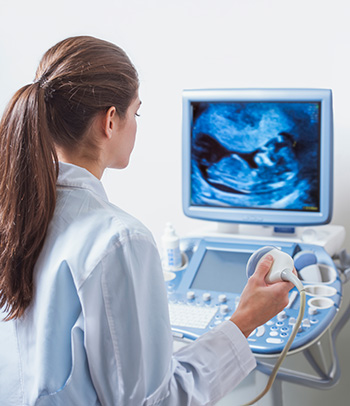
Down syndrome is often identified during pregnancy via prenatal screening or diagnostic tests or immediately after birth.
There are two types of tests available to detect Down syndrome during pregnancy: screening and diagnostic tests. Screening can be done with a blood test, sometimes along with an ultrasound. One type, called cell-free DNA (or NIPT), uses a sample of the mother’s blood and is the most accurate screening option. Screening shows whether the chance is higher or lower — it does not give a yes-or-no answer. A diagnostic test — usually amniocentesis or chorionic villus sampling (CVS) — can give a definite answer by checking the baby’s chromosomes. These tests carry a small risk of miscarriage (about 1 in 200 or lower).
Down syndrome is usually identified at birth by the presence of certain physical traits like the ones described above such as low muscle tone, a single deep crease across the palm of the hand, or an upward slant to the eyes. Because these physical signs may be present in children without Down syndrome, a chromosomal analysis is done to confirm the diagnosis.
Talk to your healthcare provider if you have questions about screening or diagnostic tests during pregnancy.
What Comes After Diagnosis?
Children diagnosed with 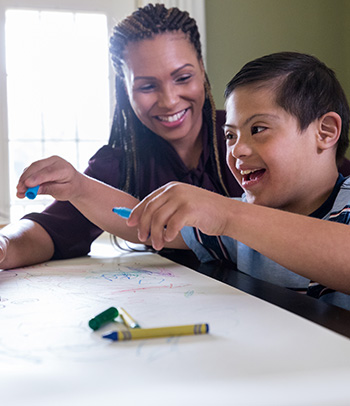 Down syndrome can lead healthy, happy lives. While the condition is lifelong, early intervention including physical, occupational, and speech therapies can significantly enhance development and independence.
In addition, high-quality healthcare and timely treatments are important for managing some of the health conditions that commonly affect those living with Down syndrome, including heart defects.
Resources
Managing the care for a family member with special needs is a lot easier with the right support. Veterans, military members, and their families have access to several helpful resources, including:
- The Exceptional Family Member Program (EFMP) – Your military branch’s EFMP is designed to support families with special medical and educational needs. Support and services include assignment coordination, respite care services for eligible families, connection with a Family Support provider, and more. In addition, the EFMP & Me tool has customizable checklists and access to information and resources.
- The Extended Care Health Option (ECHO) program provides supplemental services and extra benefits like respite care, assistive technology, expanded in-home care, and more. Enroll in your service’s EFMP to access ECHO benefits.
- TRICARE covers standard medical services for Down syndrome, including medically necessary provider visits, therapies (such as physical, occupational, and speech therapy), and prenatal screenings and genetic testing. Adult children with Down syndrome may be able to retain their TRICARE coverage beyond age 21 or 23.
- Military OneSource offers free and confidential specialty consultations, including a Special Needs Consultation. Expert consultants can help you navigate TRICARE, state Medicaid waivers, long-term care planning, finances, education concerns, and more.
- Department of Veterans Affairs (VA) offers resources and support to Veterans with dependents who have Down syndrome. A spouse, dependent, or survivor of a Veteran who meets certain service-connected disability requirements may qualify for healthcare coverage through the Civilian Health and Medical Program. In addition, if your child is rendered permanently incapable of self-support prior to age 18 they may receive “Helpless Child” status which enables the child to remain a dependent for life. Eligible Veterans can also receive a monthly dependency add-on to their VA compensation benefits.
- There are several national organizations with more information and resources related to Down syndrome. Organizations include the National Association for Down Syndrome which supports all persons with Down syndrome in achieving their full potential. Another advocacy organization is the National Down Syndrome Society which seeks to increase awareness and acceptance of those with Down syndrome.
People with Down syndrome are living much longer and healthier lives, as care and services have continued to improve over time. Today, people with Down syndrome are integrated into every facet of society, including schools, the workforce, recreation activities, healthcare, and more. It serves all of us to continue to learn about Down syndrome and the many resources available to support those living with the condition.