
Recognizing the signs of intimate partner violence, having a plan, and knowing what resources are available for support can be lifesaving.
When you’re concerned about the safety or health of your relationship, it can be both isolating and frightening. You may wonder if you should talk to someone, who that someone should be, or where you can turn for support. You may be embarrassed to talk about it, worried about the consequences, or feel there’s no way out of your situation.
You can get the answers you need and the support you deserve without compromising your safety or confidentiality. Check out the information and resources below to help you make the best decisions for your health and safety.
You’re Not Alone
According to a 2022 study, domestic violence, or intimate partner violence, is a growing concern for the military and Veteran community. Approximately 13% of active duty Service members and Veterans reported recently using intimate partner violence against a partner, and around 21% reported recently experiencing it.
Intimate partner violence includes any behavior in a current or former intimate relationship that causes physical, psychological, or sexual harm. This definition encompasses degrading, threatening, and humiliating behaviors, as well as coercive and controlling behaviors intended to dominate the victim and restrict their autonomy. This includes things like isolating a person from friends or family, monitoring their movements, or restricting their access to finances.
Studies show that certain risk factors can increase the likelihood of intimate partner violence, including high levels of stress, financial challenges, substance misuse, difficulty controlling anger, combat or non-combat related traumatic brain injuries, post-traumatic stress disorder, depression, and more. These risk factors do not excuse violence of any kind.
Things to Remember
- It can happen to anyone. Intimate partner violence can happen to anyone, regardless of age, gender, race, sexual orientation, economic status, branch of service, or rank.
- It’s never your fault. Regardless of what the abuser may say to maintain control or exert power, victims of intimate partner violence are never at fault for their partner’s behavior, and no one deserves to be abused.
- It’s not healthy. Violence should never be a part of any caring and loving relationship. Everyone deserves to be safe in their intimate relationships.
- Recognizing the signs of intimate partner violence, having a plan, and knowing what resources are available for support can be lifesaving.
Resources
Even if it feels like there’s nowhere to turn, there are several different ways to seek help when you’re in an unhealthy or unsafe relationship, and the more you know, the better prepared and safer you are. If you are in immediate danger of assault or physical injury, call 911.
Here are a few important resources:
- The Universal Sign for Help – The Universal Sign for Help, created by the Canadian Women’s Foundation, can be used in any situation where you feel unsafe or threatened, if you are being followed, or are with an abusive partner at an appointment. It’s a discreet hand gesture where you intentionally fold your four fingers over your thumb to silently signal you need someone to check in with you safely. With this simple hand gesture, you do not have to use words to communicate or leave a digital trace.
- myPlan –
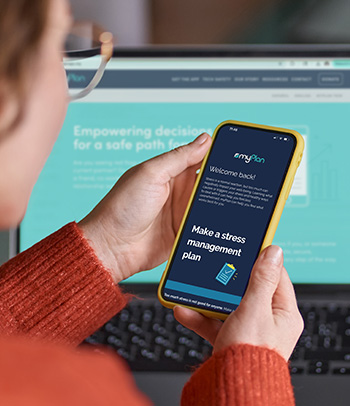 The myPlan website and free app were developed to help individuals assess their risk and make important safety decisions if they believe they may have experienced intimate partner violence. myPlan asks anonymous questions about your relationship, helps you better understand your risk of danger, and provides personalized safety strategies and resources to help you decide your best path forward. You set up your own secure PIN code to keep your information private and have a “dummy code” to hide contents if you’re ever forced to sign in. It also has a changeable icon to hide the app on your home screen.
 - Family Advocacy Program – Your installation’s Family Advocacy Program (FAP) can connect you with a domestic abuse victim advocate. Victim advocates can help you assess your risk, develop a safety plan (covering things like where to go for shelter, how to find financial and emotional support, what you should have ready to take with you if you must leave quickly, etc.), find resources, and explain your options for reporting abuse. Speaking to an advocate about your relationship doesn’t require you to make any immediate decisions. You have options to decide if, how, and when to report domestic abuse in the military, with some exceptions. FAP offers you the option of making either a restricted or unrestricted report. Both options are outlined here:
- Restricted reporting option – With a restricted report, law enforcement is not notified, and command is not involved. You still have access to the full range of FAP services, like counseling and support from an advocate, but in most cases, your report is kept confidential. You cannot use a restricted report if you are at immediate risk of serious harm.
- Unrestricted reporting option – When an unrestricted report is made, FAP will notify both law enforcement and the Service member’s military command. Law enforcement will conduct an investigation, contact the alleged abuser, and notify command. You can seek a military or civilian protective order, which can restrict your abuser from having contact with you or other protected individuals.
- The National Domestic Violence Hotline – The hotline offers 24/7 free confidential support to anyone affected by relationship abuse. You can call, text, or chat with an advocate who will listen without judgment and help you begin to address what’s going on in your relationship.
- Confidential counseling – Military members and their partners are eligible for free and confidential counseling. You can connect with a counselor through your installation’s Military and Family Support Center or by calling 800-342-9647. Military OneSource also offers tools and support for all stages of your relationship.
Everyone deserves to feel safe and secure in their relationships. If you’re worried about the health of your relationship, reach out for support today.