

By adopting healthy eating habits now, you’re helping your children for a lifetime.
Every parent wants to raise happy and healthy kids. From the moment a child is born, parents strive to make all the right choices for their health and development. But between work schedules, after-school activities, and managing the household (not to mention a deployment or relocation), you may feel like it’s impossible to focus on your family’s nutrition, too. But starting a healthy diet in childhood has many important benefits.
Learn more about the importance of good nutrition and how you can help your children develop healthy eating habits that last a lifetime.
Why Does Childhood Nutrition Matter?
You may wonder why nutrition matters so much in young kids. The rates of obesity and Type 2 diabetes continue to increase among kids, and the health effects can last well into adulthood. Kids who eat diets full of processed foods high in sugar and fat but low in nutrition have an increased risk for high blood pressure and heart problems, too.
Taking the time to teach your kids the importance of good nutrition has many important health benefits, including:
- Keeps skin, teeth, and eyes healthy
- Supports brain development
- Boosts immunity
- Supports muscle growth, strong bones, and healthy development
- Helps achieve and maintain a healthy weight
- Aids with digestive system function
- Helps prevent many chronic diseases, such as obesity, diabetes, and more
- Provides energy and mental alertness
How Can I Help My Children Eat Nutritiously?
- Expose them to healthy foods.
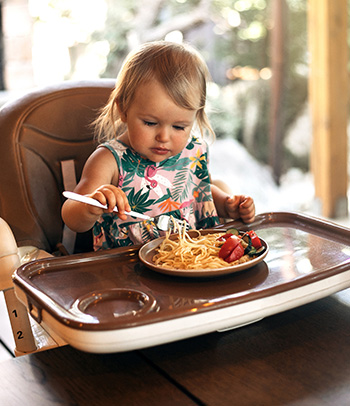 Early eating experiences can affect how we eat as we get older. Your children may not like every food you give them on the first try but exposing them to healthy foods repeatedly can make a difference in the long run. Make it a point to add new healthy ingredients and foods to your menu on a regular basis.
 - Avoid added sugars. Children under age 2 should not consume added sugars. Children ages 2-18 should consume no more than 25 grams (6 teaspoons or 100 calories) of added sugars per day, regardless of age or caloric intake.
- Experiment with healthy substitutions. Your kids may already have favorites, like tacos or chicken nuggets, so try making some of your go-to meals healthier with small changes. For example, use ground turkey instead of beef when you make tacos. Try grilled chicken strips with their favorite dipping sauce instead of fried nuggets. Try a protein-based pasta for your spaghetti night or blend cottage cheese into the sauce for additional protein. These small substitutions can make a big difference.
- Learn how to read labels together. A food label is full of helpful information you can share with your kids. You can teach them to read the ingredients listed on packaged foods. Healthy Homefront’s article Making Sense of Food Labels walks you through how to use a food label to make healthier choices.
- Teach as you eat. As you go through your day, take time to teach your kids about nutrition in simple ways. If you give them carrots, share how good they are for their eyes and skin. If you’re pouring a glass of milk, talk about how calcium is important for their growing bodies. You can talk about how you feel after eating different types of food, too. For example, compare how you feel after a doughnut for breakfast vs. a bowl of oatmeal and fruit.
- Be their role model.
 When children observe good habits, they’re more likely to follow along. For example, if you have soda instead of water with dinner, they’ll internalize that. If they see you loading your plate with a pile of veggies, they’ll note that too. Show them the habits you want them to adopt.
 - Get them involved. Try to get your kids to invest in their food choices. Plan weekly meals together, talk about the healthy foods you’re buying, and take them to the grocery store. If they’re old enough, have them cook with you, too.
- Avoid sugary drinks. Sweetened beverages, like soda, coffee drinks, and sports drinks, add lots of extra calories and sugar to your kids’ diets. Encourage your children to drink water or low-fat dairy on a regular basis. Experiment with flavored water recipes to keep things fun. Children under 12 months should not drink juice.
- Teach moderation. Sometimes, telling a child they can’t have sugar or banning a certain food makes them want to have it even more. Instead, try to teach your kids about moderation. Get them to connect the ideas of treats to special occasions and outings instead of daily foods to consume.
- Avoid energy drinks. Energy drinks are becoming more and more popular among children and teens, but the American Academy of Pediatrics states that energy drinks are not appropriate for children or adolescents. Most contain high levels of caffeine, which can have negative health effects such as insomnia, increased heart rate, increased aggression, and headaches. In addition, most contain large amounts of sugar and little to no nutritional value, which can lead to weight gain, cavities, and diabetes.
- Make it easier on yourself. It can be hard to find time to make healthy meals every day of the week, so do your best to prep things in advance. For example, cut up fruits and veggies for healthy snacks before the week begins. Grill some extra chicken one night so you can put it in burritos the next night. Freeze an extra portion of soup. Check out these healthy snack and lunch ideas to add to your rotation.
- Take advantage of support and resources. As a military family, you have access to a wide range of support. Check out the resources below to find what you need to jumpstart your family’s healthy eating habits.
Resources
- TRICARE offers several resources designed to support you and your family’s health and wellness goals, including parenting resources starting from pregnancy, as well as other health and wellness services.
- Military OneSource also has several resources for parents and families. You can schedule a free health and wellness coaching consultation to learn more about nutrition and your family’s health. Military OneSource’s Nutrition & Fitness MilLife Guide has suggestions for good nutrition, activity, and more for the whole family.
By adopting healthy eating habits now, you’re helping your children for a lifetime!