

For years, colorectal cancer was considered a cancer you get later in life, but in recent years, more and more young people are being diagnosed with colorectal cancer.
For years, colorectal cancer was considered a disease that developed later in life, but in recent years, more and more young people have been diagnosed with colorectal cancer. What clinical factors may explain the rise in people younger than 50? How can you assess your own risk level?
Learn more about the rise of colorectal cancer in young people, explore some of the potential causes, and get tips for understanding and managing your cancer risk.
What Is Colorectal Cancer?
Colorectal cancer starts in the colon or the rectum, usually as a growth, or a polyp, on the inner lining of the colon or rectum. Polyps are common, especially as you age, and most are benign or noncancerous. However, some polyps may change into cancer over time, depending on the type, size, number of polyps, and more. If cancer forms in a polyp, it may grow into the wall of the colon or rectum and spread over time.
What Are the Statistics Behind the Increase in Colorectal Cancer in Young People?
According to research from the National Library of Medicine, rates of colorectal cancer have nearly doubled in younger adults (people less than 50 years old) in the United States since the early 1990s. The New England Journal of Medicine states that early-onset disease in people younger than 50 years of age accounts for 10% of colorectal cancer cases, and the incidence is increasing. This is in contrast to decreasing incidence and mortality rates in adults older than 50 in the last three decades, mainly due to more people getting regular colorectal cancer screenings and reducing lifestyle-related risk factors like tobacco use.
Why Are More Young People Getting Colorectal Cancer?
Research cannot pinpoint a single factor that has driven the colorectal cancer rates among young people. Instead, in addition to genetic factors such as a family history of colorectal cancer or colon polyps, or certain inherited syndromes, like Lynch syndrome, multiple studies have pointed to several common factors that can be modified by a change in health habits, which may explain the rise.
- Western dietary pattern – The Western diet, a dietary pattern characterized by high consumption of processed foods, saturated fats, refined sugars, and low fiber, can increase your risk for colorectal cancer, as well as other chronic conditions like obesity and diabetes.
- Sugar-sweetened beverages – Sugary beverages, like sodas, energy drinks, sweetened coffee drinks, and fruit juices with added sugar, have been linked to an increased risk for colorectal cancer.
- Obesity – Being overweight or obese increases the risk of colorectal cancer across all age groups and puts you at a higher risk of dying from it. Childhood and adolescent obesity also increase early-onset colorectal cancer risk.
- Regular tobacco or alcohol use – Long-term smoking and heavy alcohol use have been associated with a higher likelihood of developing colorectal cancer.
- Sedentary lifestyle – A lack of physical activity is linked to higher colorectal cancer rates.
- Processed meats and red meat – Red meat, like beef, pork, and lamb, as well as processed meats like hot dogs, bacon, and sausage, are associated with an increased risk of certain cancers, including colorectal cancer.
In addition to these risk factors, military members and Veterans may have additional risk factors to consider. Exposure to environmental hazards connected to deployment, such as burn pits, increases the likelihood of developing serious health conditions, including colorectal cancer. In addition, chronic infections such as hepatitis B and C, which are more prevalent among Veterans, increase risk.
What Steps Can I Take to Manage My Cancer Risk?
- Know the symptoms of
 colorectal cancer. Studies show that the majority of younger people diagnosed with colorectal cancer present symptomatically prior to their diagnosis. The most common presenting symptoms include rectal bleeding, abdominal pain, and altered bowel habits, such as diarrhea, constipation, or bloody or unusual stools. Concerning stools can include dark or black stools, ribbonlike stools, or stools that are mixed with blood. Iron deficiency anemia is another important symptom, as it confers a 10-fold increased risk for early-onset colorectal cancer.
 - Take symptoms seriously. The earlier cancer is detected, the easier it is to treat, but young people often put off going to the doctor. They may explain away symptoms as something else less serious, such as blaming hemorrhoids for their bloody stools. But if you don’t take symptoms seriously, it can delay diagnosis, leading to more advanced cancer that is harder to treat. If you experience any symptoms of colorectal cancer, communicate openly with your health care provider.
- Understand when you
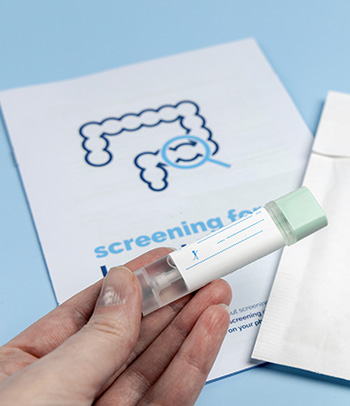 should be screened. The current standard recommendation from multiple organizations, including the U.S. Preventive Services Task Force, the American Cancer Society, and the U.S. Multi-Society Task Force, is to start average-risk screening at age 45 instead of 50.
 - Know your family’s health history. Knowing your family’s cancer history can provide you with important information about your own risk for colorectal cancer. Talk to your family members and find out – Who had/has cancer? How are you related? What type of cancer did they have? At what age were they diagnosed? Once you gather this information, share it with your health care provider to determine whether you are at increased risk and need to begin screening earlier. For example, individuals with a first-degree relative with colorectal cancer or advanced adenoma diagnosed before age 60, or two or more first-degree relatives at any age, should begin screening at age 40 or 10 years before the youngest affected relative’s diagnosis, whichever comes first.
- Take care of your health. To decrease your risk, adopt a healthy lifestyle. A healthy eating pattern should include whole grains, a variety of vegetables (especially dark green, red, and orange), fruits, and fiber-rich legumes (like lentils and beans), while limiting red and processed meats, sugar-sweetened beverages, and highly processed foods. To help you identify processed foods, a good rule of thumb is to ensure the ingredient list has items you would typically use in home-cooked meals. Check out Healthy Homefront’s Making Sense of Food Labels for more information. In addition, make sure you’re getting enough activity. Adults should aim for 150-300 minutes of moderate-intensity physical activity per week or 75-150 minutes of vigorous-intensity activity.
- Eliminate alcohol and tobacco use. The American Cancer Society advises that it’s best not to drink alcohol at all for cancer prevention. If you choose to drink, you should limit your intake, but the primary recommendation is abstinence. If you smoke, reducing your cancer risk could be the motivation you need to quit.
- Maintain a healthy weight. Talk to your health care provider about what a healthy weight looks like for you and take the steps you need to reach it.
Resources
- TRICARE covers several options for colorectal cancer exams, including colonoscopies and stool tests. You can even take some stool tests at home by using a kit and sending it back to a lab for results.
- Colorectal cancer is one of the most common cancers among Veterans, with the Department of Veterans Affairs (VA) reporting approximately 4,000 new cases each year. VA offers screenings for colorectal cancer, including easy-to-use kits that can be done at home. Learn more about VA’s at-home tests and screening guidelines. The PACT Act designated all gastrointestinal cancers, including colorectal cancer, as presumptive conditions for Veterans exposed to burn pits, ensuring access to VA health care and benefits without requiring proof of a direct service connection.
No matter your age, it’s important to understand your risk for colorectal cancer. Commit to regular screenings and a healthy lifestyle to reduce your risk today!