
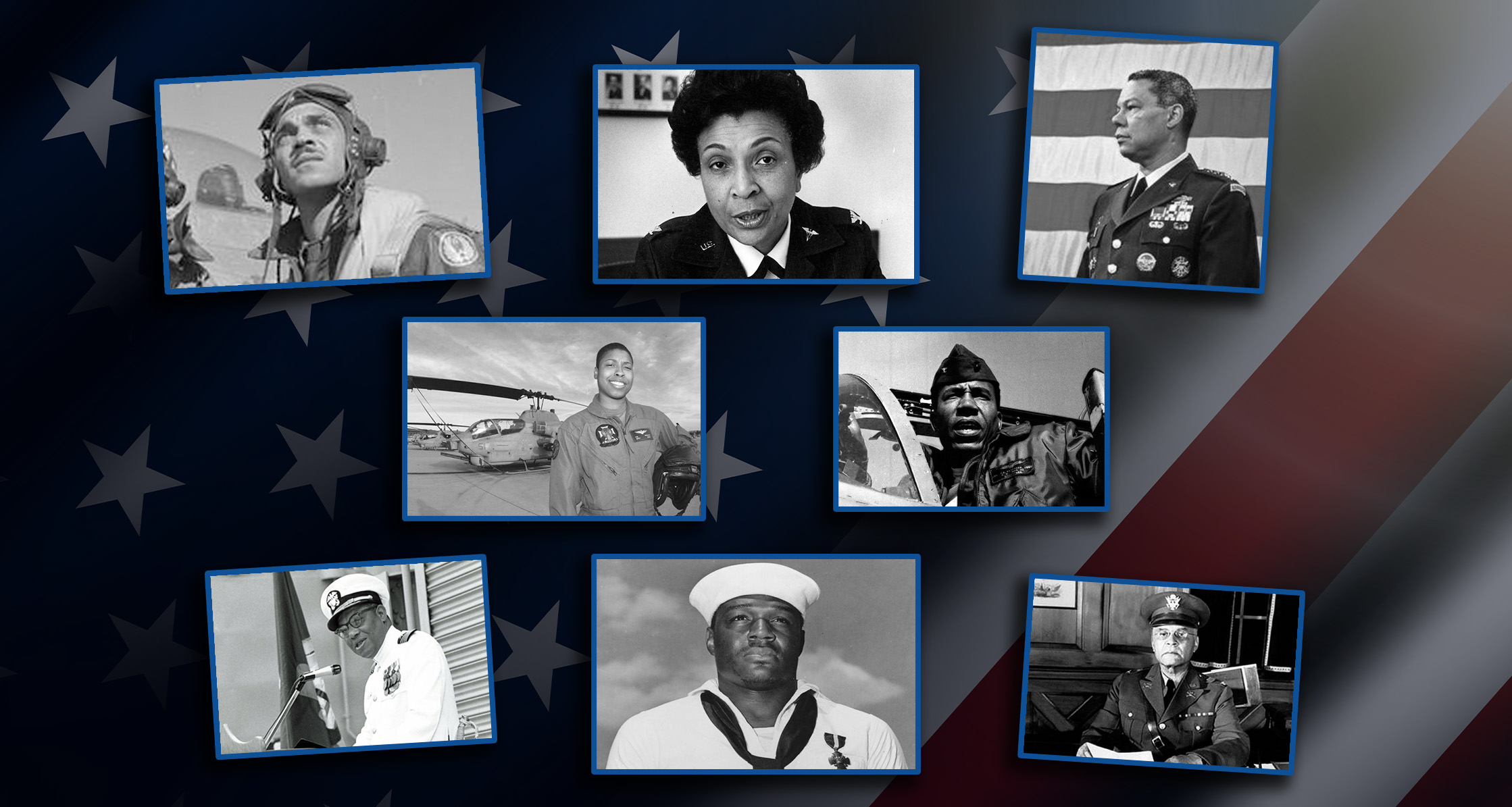
On the 100th anniversary of Black History Month, we look back to honor Courageous Firsts whose bravery, leadership, and service transformed the U.S. military and opened doors for those who followed.
This year features the 100th anniversary of honoring Black History Month, a nationwide commitment to recognize and celebrate the achievements, contributions, and enduring impact of Black Americans. Throughout American history, Black service members have broken barriers while serving with extraordinary courage, skill, and dedication – often in the face of systemic racial discrimination and limited opportunity. In recognition of this milestone year, we honor a selection of Black trailblazers whose “firsts” reshaped the U.S. military and expanded what was possible for generations who followed. Their stories reflect not only historic achievement, but unwavering commitment to what we highly value at TriWest Healthcare Alliance: dedicated service, collaboration, integrity, and excellence.
Courageous Firsts
Doris Miller, known as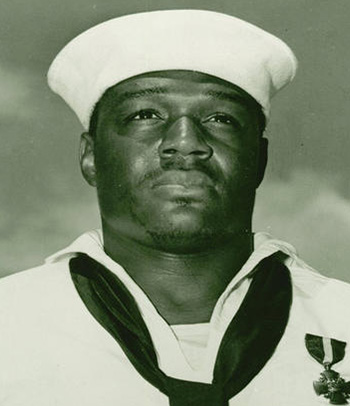 “Dorie,” became one of the earliest heroes of World War II for his extraordinary bravery during the Dec. 7, 1941, early morning attack on Pearl Harbor. Though assigned as a mess attendant, Miller sprang into action aboard the USS West Virginia, carrying his mortally wounded captain to safety and manning a machine gun to fire on attacking enemy aircraft despite having no formal gunnery training. For his actions, he became the nation’s first Black sailor awarded the prestigious Navy Cross medal, signifying extraordinary heroism in combat. Pacific Fleet Commander Adm. Chester Nimitz presented it to Miller aboard the aircraft carrier USS Enterprise, and Miller’s image later appeared on Navy recruitment posters. Miller was tragically killed in combat in 1943 when his ship, the USS Liscome Bay, was struck by a Japanese torpedo, leaving behind an extraordinary legacy of courage, sacrifice, and service that helped reshape recognition in the U.S. military.
Benjamin O. Davis, Sr.,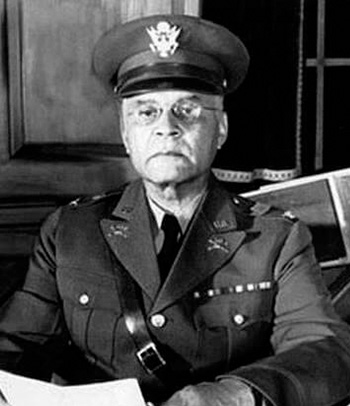 made history on Oct. 25, 1940, when he became the first Black American to attain star – or flag – rank in the U.S. Army, promoted to brigadier general at a time when opportunities for Black officers were severely limited. Despite exemplary service with the famed Buffalo Soldiers in the Philippines and along the U.S.-Mexico border, Davis was routinely assigned roles intended to keep him from commanding white troops, including ROTC instruction, National Guard advisory posts, and diplomatic duty as military attaché to Liberia. During World War II, he served as an adviser on race relations in the European Theater, earning the Distinguished Service Medal for helping develop fair and equitable policies that influenced lasting change within the U.S. military. His steady, determined rise through the ranks paved the way for future generations of minority service members, including his son, Gen. Benjamin O. Davis, Jr., profiled below.
Benjamin O. Davis, Jr.,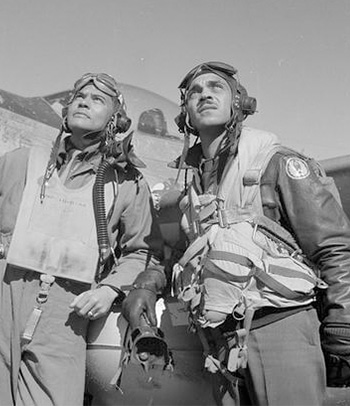 built a legacy of commitment, courage, and leadership that reshaped the U.S. military, culminating in his historic promotion to four-star general in 1998 as the first Black commissioned officer promoted to that rank in retirement. A U.S. Army West Point graduate who endured years of isolation as the academy’s only Black cadet, Davis was initially barred from aviator training despite his academic excellence. His path changed when President Franklin D. Roosevelt ordered the creation of a segregated aviation unit, leading Davis to Tuskegee Army Air Field where he became founder and commander of the famed Tuskegee Airmen. Under his leadership, the unit shattered racist assumptions through exceptional combat performance, including a legendary 1945 bomber escort mission to Berlin with no friendly losses. A Veteran of three wars and the son of the Army’s first Black general, Davis was later hailed as “a great warrior, a great officer and a great American” by Defense Secretary William S. Cohen.
Samuel Lee Gravely, Jr.,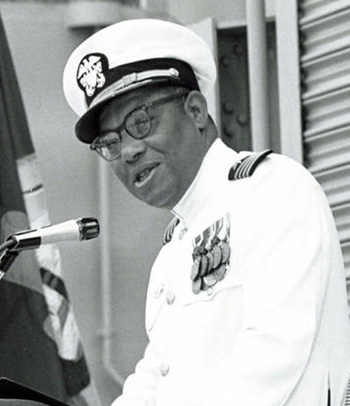 enlisted in the U.S. Navy Reserve in 1942 and rose through the ranks during a dedicated 38-year career marked by extraordinary leadership and historic firsts. Receiving his commission through the Navy’s V-12 officer training program during World War II, Gravely began his career training recruits before serving at sea aboard the PC-1264, one of only two Navy ships at the time with a largely Black crew. He went on to break barrier after barrier, becoming the first Black officer to command a U.S. Navy warship; the first Black officer to command a warship under combat conditions since the Civil War; the Navy’s first Black admiral; and the Navy’s first Black vice admiral. His dedicated and trailblazing service culminated in his command of the U.S. Third Fleet, cementing a legacy that reshaped opportunity and leadership in the U.S. military.
Frank E. Petersen, Jr.,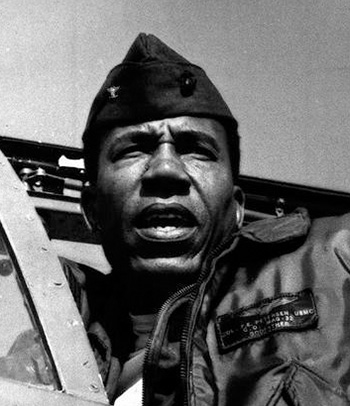 enlisted in the U.S. Navy in 1950 as an electronics technician, but after the combat death of Black barrier-breaking Navy aviator Jesse L. Brown, he resolved to become a pilot himself. In 1952, Petersen completed flight training, accepted a commission in the U.S. Marine Corps, and went on to fly more than 350 combat missions across the Korean and Vietnam Wars. Over a trailblazing career, he became the first Black Marine to command a fighter squadron, air group, air wing, and major base, and in 1979 became the first Black general in the Marine Corps. He retired as a lieutenant general in 1988 after decades of distinguished service, and his legacy was further honored in 2017 with the naming of the guided-missile destroyer USS Frank E. Petersen Jr. (DDG-121).
Hazel Johnson-Brown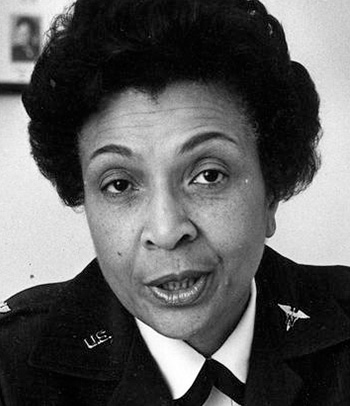 served in the U.S. Army from 1955 to 1983, building an extraordinary career defined by perseverance, leadership, and historic firsts. After being denied admission to a nursing school because she was Black, she pursued her training in New York and later joined the U.S. Army Nurse Corps, serving as a staff nurse in Japan and chief nurse in Korea. While on active duty, Johnson-Brown earned a bachelor’s degree from Villanova University, a master’s degree from Columbia University, and a doctorate from The Catholic University of America. In 1979, she made history as the first Black female general in the Army and the first Black chief of the Army Nurse Corps, later serving as director of the Walter Reed Army Institute of Nursing. Her legacy stands as a powerful testament to courage, persistence, and service in the face of adversity.
Colin Powell came of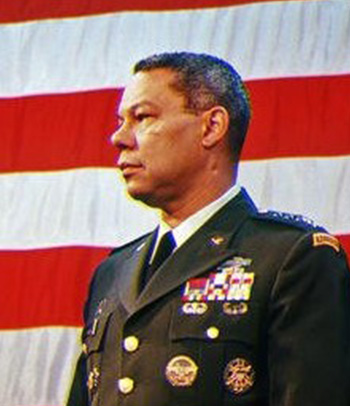 age as the son of Jamaican immigrants just as the U.S. military was desegregated, later reflecting that the change occurred within his own generation. After earning an ROTC commission from the City College of New York, Powell rose through the U.S. Army as an Airborne Ranger, completed two combat tours in Vietnam, and commanded at every level up to Army V Corps. From 1989 to 1993, he served as the first Black chairman of the Joint Chiefs of Staff, acting as principal military adviser to Presidents George H. W. Bush and Bill Clinton during a period of major global transition. Powell continued his record of service in 2001 when he became the first Black U.S. secretary of state, serving under President George W. Bush and furthering his enduring legacy of leadership, historic firsts, and national service.
Vernice Armour broke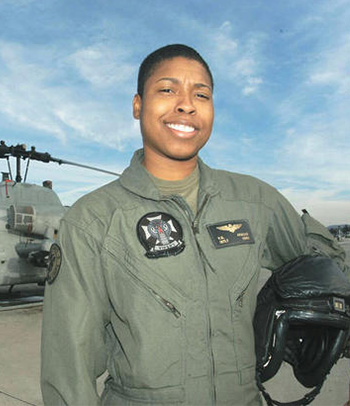 barriers in 2003 when she became America’s first Black female combat pilot, flying AH-1W SuperCobra attack helicopter missions during the invasion of Iraq. Before joining the U.S. Marine Corps, Armour made history in civilian service as the first Black female police officer in Tempe, Arizona. She entered Marine flight training in 1998, earned her wings in 2001 as the top graduate of her class, and completed two combat tours in the Persian Gulf. Known for her exceptional leadership and physical endurance, she was named Camp Pendleton’s Female Athlete of the Year and won the base’s Strongest Warrior Competition twice. Following her military service, Armour transitioned to a career as a professional speaker and author, sharing lessons on resilience, leadership, and breakthrough performance.
As we commemorate the 100th anniversary of Black History Month, these Courageous Firsts remind us that progress is built by individuals willing to step forward when the path is difficult, uncertain, and often unfair. Their legacies continue to shape today’s armed forces and stand as enduring examples of determination, courage, perseverance, and service to our nation. In honoring their remarkable achievements, we also recognize the challenges they accepted, the doors they opened, and the responsibility we share to carry their legacy forward.
Source Material: Profiles of these heroes, including their images, were compiled and edited from information obtained at www.military.com.