
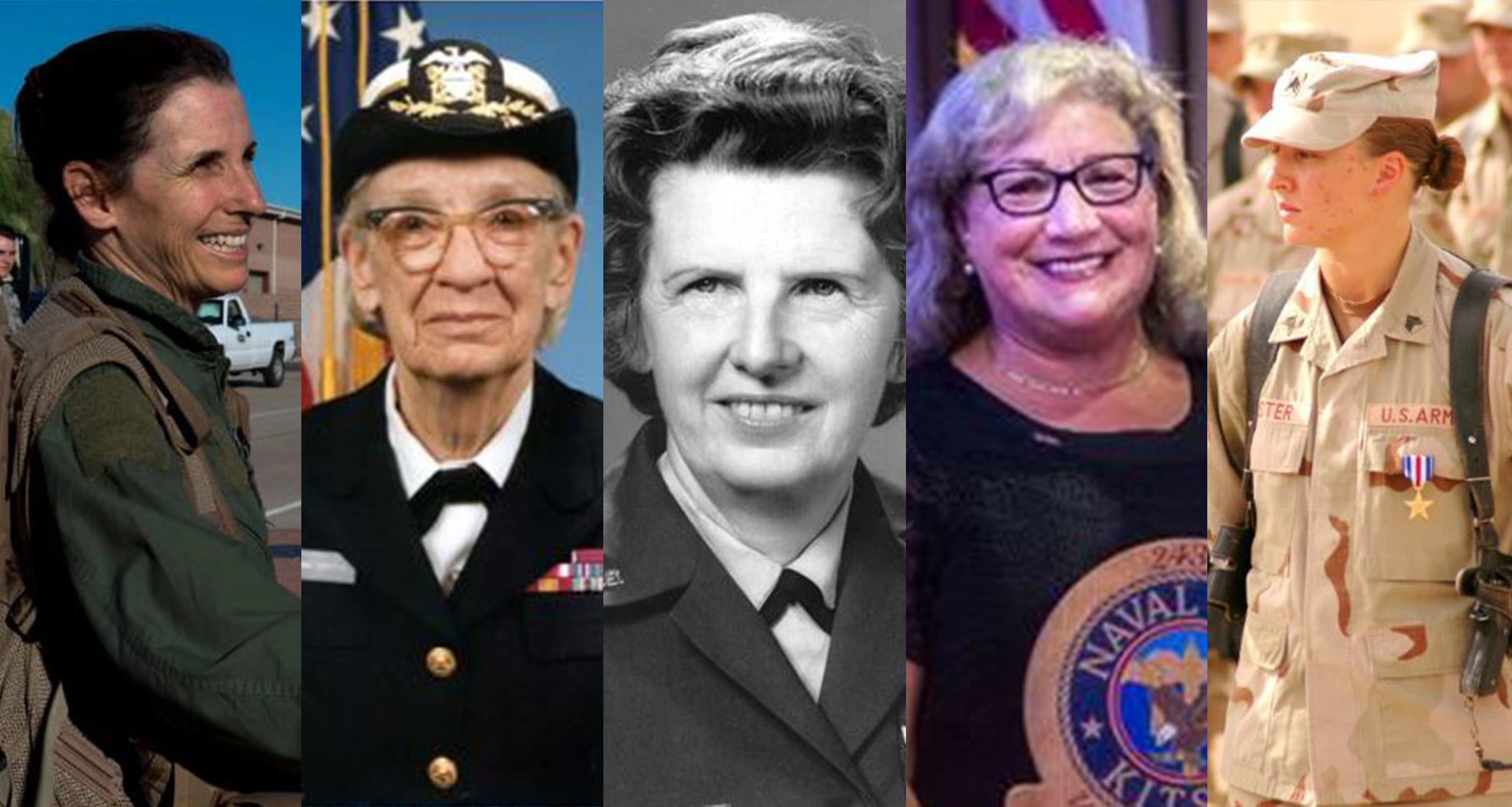
The women spotlighted here represent generations of service, courage, determination, and innovation. This Women’s History Month, we honor the legacy of these women and all who served before and after them.
This Women’s History Month, we are spotlighting a few brave and accomplished women U.S. military heroes who forged new paths and paved the way for future generations of women to serve.
U.S. Army Private Cathay Williams
Cathay Williams was born into slavery in Missouri in 1844. According to Army archives, at age 22 she enlisted in the U.S. Army under the name William Cathay to “make her own living.”
Two years into her service, Williams contracted smallpox. During treatment, her identity was discovered and she was honorably discharged. Williams would not be deterred from serving her nation. The National Park Service reports that she went on to join the legendary Buffalo Soldiers—the only known woman to do so.
Williams died in 1889 or 1890 after being denied a disability pension related to her military service.
U.S. Navy Rear Adm. Grace Brewster Murray Hopper
Grace Hopper joined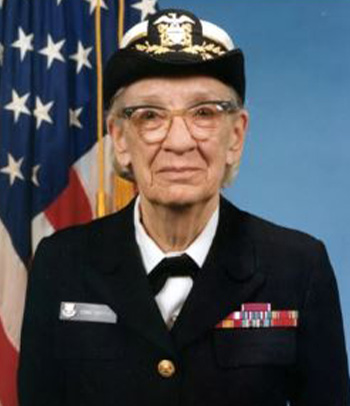 the United States Naval Reserve during World War II. A computer scientist and mathematician, she became a pioneer in computer programming.
Hopper helped develop the UNIVAC I, the first commercial electronic computer, and contributed to naval applications for COBOL (Common Business-Oriented Language). Her work involved translating symbolic math codes into machine language, allowing programmers to store code on magnetic tape and retrieve it when needed.
Her contributions were so highly regarded that after retiring in 1966 as a commander, she was recalled to active duty to help standardize the Navy’s computer programming languages.
Known as “Amazing Grace,” Hopper was widely respected as a leader, mentor, and pioneer. She received honorary doctorates from more than 30 universities and was laid to rest with full military honors at Arlington National Cemetery in 1992.
U.S. Army Col. Ruby Bradley
Serving in two wars, surviving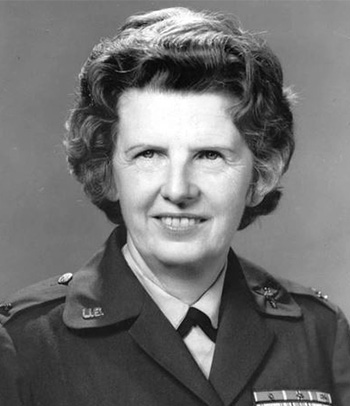 more than three years in captivity, and enduring near starvation, Col. Ruby Bradley became one of the most decorated women in U.S. military history.
Born in West Virginia, Bradley joined the U.S. Army Nurse Corps as a surgical nurse in 1934.
Her commitment to service continued during World War II in 1941 when she was taken captive by Japanese forces in the Philippines. During more than three years as a prisoner of war (POW), Bradley and fellow nurses cared for other prisoners under brutal conditions. Their dedication earned them the nickname “Angels in Fatigues.”
While imprisoned, Bradley survived mainly on rice and shared her limited rations with children in the camp. Despite extreme hardship, she assisted in 230 major operations and delivered 13 newborns while her own weight dropped to a staggering 84 pounds.
Bradley and her fellow POWs were freed in February 1945 when U.S. troops liberated the camp. She later served during the Korean War and continued her career in the Army Nurse Corps. After 30 years of service, Bradley became the third woman in U.S. history to be promoted to the rank of colonel.
Her military record included 34 medals and citations, receiving two Legion of Merit awards, two Bronze Stars, two Presidential Unit Citations, the World War II Victory Medal, and the U.N. Service Medal. Bradley also received the Florence Nightingale Medal, the highest nursing profession distinction awarded by the International Committee of the Red Cross.
U.S. Navy Commander Darlene Iskra
Darlene Iskra enlisted in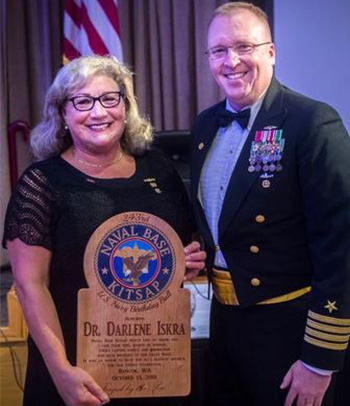 the U.S. Navy in 1979 and quickly distinguished herself as one of the first three women line officers to graduate from the Naval School of Diving.
Over the next decade Iskra served as a diving instructor, a shore duty instructor, and an operations officer aboard salvage ships.
In 1990 she was promoted to commanding officer, becoming the first woman to command a U.S. Navy ship. The USS Opportune, a salvage and rescue vessel, supported operations during Operation Desert Storm in the Suez Canal.
Iskra served in the Navy for 21 years. Her highest award was the Defense Meritorious Service Medal.
U.S. Air Force Lt. Col. Martha McSally
Martha McSally graduated with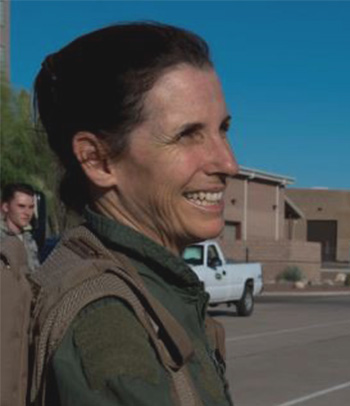 distinction from the U.S. Air Force Academy in 1988 and became the first American woman to fly combat missions following the 1991 removal of restrictions on women in combat aviation.
During her Air Force career she piloted the A-10 Thunderbolt II “Warthog” close air support aircraft over Iraq and Kuwait during Operation Southern Watch following the first Gulf War.
McSally later became the first woman to command a U.S. Air Force fighter squadron, the 354th Fighter Squadron based at Davis-Monthan Air Force Base in Arizona.
During her military service, McSally deployed six times to the Middle East, accumulated 325 combat flight hours, and earned a Bronze Star, six Air Medals, and the 2006 David C. Schilling Award for outstanding contributions to aviation.
U.S. Army Sgt. Leigh Ann Hester
Leigh Ann Hester was 19 when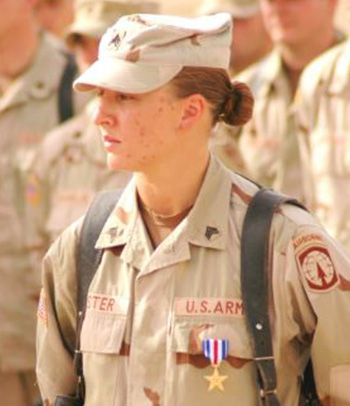 she enlisted in the U.S. Army in 2001. Four years later she received the Silver Star – the third highest U.S. military decoration. With her prestigious meritorious award, she became the first woman since World War II to earn the medal for exceptional valor—and the first woman in the Army ever to receive it for direct combat action.
Hester’s heroic combat actions leading to her Silver Star award took place during the Iraq War in March 2005. Her squad was escorting a supply convoy when insurgents ambushed the vehicles. Hester led her team through the insurgent ambush, helping defeat the attackers.
When the combat ended, 27 insurgents had been killed, six wounded, and one captured.
Upon learning she was being considered for the Silver Star, Hester told Army Times, “I’m honored to even be considered, much less awarded, the medal.”
She added, “It really doesn’t have anything to do with being a female. It’s about the duties I performed that day as a soldier.”
Honoring Their Legacy
The women spotlighted here represent generations of service, courage, determination, and innovation. By breaking barriers in combat, leadership, medicine, and technology, they helped expand opportunities for women in military service and paved the way for those who followed. This Women’s History Month, we honor the legacy of these women and all who served before and after them.
Sources
Information for this article was compiled from publicly available resources including the National Park Service, U.S. Navy History and Heritage Command, U.S. Army Medical Department Office of Medical History, U.S. Air Force historical archives, and U.S. Army historical records. Images are available via public domain.