

Breathwork is something you can learn to do yourself anytime, anywhere, to help manage your response to stress.
We’ve probably all used the expression “Take a deep breath” during a stressful situation. Maybe it’s a deep breath taken to focus yourself before a big test, or a deep breath taken to calm down during an argument with your spouse, or a deep breath released after a long day at work to let go of some stress.
It turns out, these deep breaths are a healthy way to manage stress and enhance our health and well-being. Learn more about the benefits of breathwork, some simple breathing exercises to try, and tips for incorporating it into your daily routine.
What Is Breathwork?
Breathwork refers to breathing techniques that intentionally channel and focus on the breath. It can be practiced anywhere, anytime, using a variety of simple techniques. The goal is often to calm yourself, focus your mind, and reduce your body’s response to stress.
What Are the Benefits?
As Veterans and members of the military community, you know how demanding and stressful life can be. From deployments and frequent moves to reintegration and the management of mental and physical health conditions, it can feel overwhelming. While many common and successful treatments for stress rely on external solutions, such as therapy or medication, breathwork is something you can learn to do yourself anytime, anywhere, to help manage your response to stress.
Chronic stress puts wear and tear on the body and mind and can raise your blood pressure, increase inflammation, affect your heart health, and much more. Breathwork helps shift the body from the “fight-or-flight” (sympathetic) nervous system response to the “rest-and-digest” (parasympathetic) state. Specifically, slow breathing at around 6 breaths per minute creates resonance effects that maximize heart rate variability and baroreflex sensitivity, key markers of healthy autonomic function, and may help you:
- Reduce stress
- Manage pain
- Reduce feelings of anxiety or depression
- May help lower blood pressure modestly (reductions of approximately 5-6 mmHg systolic and 3-6 mmHg diastolic in studies)
- May support improved focus, alertness, and cognitive function through effects on brain activity and autonomic regulation
- Improve sleep and your mood
- Improve energy levels, focus, alertness, and memory
- Strengthen lung function
While research shows promising benefits, most studies have been of moderate quality, and more rigorous research is ongoing. Breathwork appears safe with no reported adverse effects in clinical studies.
What Breathwork Techniques Should I Try?
Breathwork can be used anytime when you’d like to manage stress, quiet your mind, prepare for sleep, or gain focus. While diaphragmatic breathing and slow breathing techniques have the strongest research support, other methods like box breathing and 4-7-8 breathing have shown promise in smaller studies for reducing anxiety. The key is finding what works best for you, as individual response varies. Here are some simple suggestions:
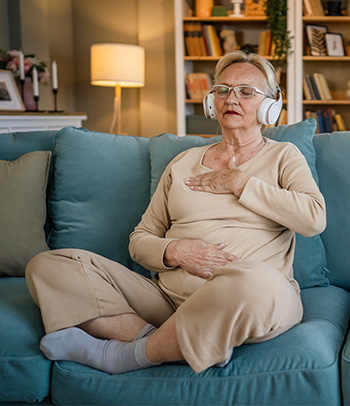
- Diaphragmatic breathing or belly breathing – Sit or lie down in a comfortable position, and place one hand on your upper chest and the other on your belly just below your rib cage. Inhale slowly through your nose, feeling your belly expand, and your hand move outward (the hand on your chest should be mostly still). Then, exhale slowly through your mouth, gently pressing your belly inward. Repeat several times. The goal of belly breathing is to engage your diaphragm, a powerful muscle at the base of your lungs.
- Box breathing or 4-4-4-4 breathing – Begin by inhaling slowly through your nose for four counts. Then hold your breath for four counts, and exhale slowly through your mouth for four more counts. With your lungs empty, hold your breath for another four counts. The four counts of four make it easy to remember (just like the four sides of a box), and counting to four can serve as a mantra to help you focus.
- 4-7-8 breathing – Inhale through your nose for four counts, hold your breath for seven counts, and then exhale forcefully through your mouth, making a “whooshing” sound for eight counts. Many people use this exercise to help relax before bed, and it can be done sitting or lying down.
- Alternate nostril breathing
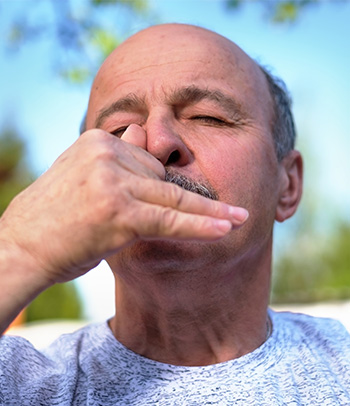 – Sit comfortably and close your right nostril with your thumb or finger. Inhale slowly and deeply through your left nostril. Then close your left nostril, release your right nostril, and exhale through the right side. Then inhale through your right nostril, close it, and exhale through your left nostril. Continue alternating in this way for several minutes.
 - Pursed lip breathing – Slowly inhale through your nose and gently exhale through pursed lips. To purse your lips, pinch them inward like you’re blowing a kiss. This technique makes a calming “whooshing” noise as you exhale.
What Steps Can I Take to Get Started?
- Observe your breathing. Most of us don’t pay much attention to how we breathe, so take a few minutes to check. Is your breathing shallow or deep? Smooth or choppy? Are you breathing mostly in your chest or in your belly?
- Find somewhere quiet. One of the benefits of breathwork is that you can use it anywhere, anytime, but when you’re just getting started, it may help to have ideal conditions. Find a quiet place and get into a comfortable position, such as sitting or lying down. Try to set aside anywhere from 5 to 10 minutes when you won’t be interrupted.
- Avoid trying too hard.
 With too much effort, you can actually create more stress for yourself. Don’t worry about “clearing your mind completely,” for example, because you may not be able to. If your mind drifts or you get interrupted, don’t worry about it. It doesn’t have to be perfect.
 - Optimize breathing rate: Research suggests that slow breathing at approximately 6 breaths per minute appears particularly effective for maximizing heart rate variability and promoting relaxation.
- Make it part of your routine. Studies on the effectiveness of breathwork found that to maximize stress reduction, it’s important to practice for more than five minutes a day, preferably multiple times a day over a period of time. At the beginning, set aside one or two times during your day when you can practice different techniques. As it becomes easier to do, you can use it whenever you need it.
- Reflect. Find the technique or combination of techniques that works best for you. Which technique was easiest or made you feel the most relaxed? Continue to practice, and soon you’ll be reaping the benefits of regular breathwork.
Resources
- Military OneSource offers a set of guided audio drills called “Chill Drills” to help you slow your heart rate, lower blood pressure, and reduce stress levels in the body. The drills target different challenges you may face, like negative thoughts, stress, and sleeplessness.
- Military OneSource also offers Breathe2Relax, a free app that provides different breathing exercises to help reduce stress and relax tension throughout your body.
- The Department of Veterans Affairs #LiveWholeHealth series features several videos that guide you through different relaxation techniques, including breathing exercises, short yoga and Tai Chi sessions, body scans, and more.
Breathwork is an easy tool to add to your daily routine to help you combat stress and relax whenever you need it most!