

Improving your fitness doesn’t have to be hard. A simple walking routine may be just what you need!
Sedentary lifestyles are becoming more common. More people are sitting for long periods of time when working or commuting, and for many of us, leisure activities even come in the form of sitting, scrolling, and watching. All of this inactivity is contributing to the rise of several chronic conditions, like obesity, high blood pressure, and diabetes.
Enter: Walking, which is an inexpensive, low-maintenance activity. Something as simple as a daily brisk walk can help you improve your health and lower your risk for many long-term health conditions.
Learn more about the health benefits of walking and find tips and resources to develop a walking routine.
Health Benefits of Walking
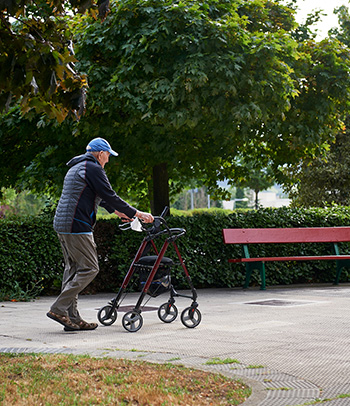
Walking is a popular activity, and it’s easy to see why. It requires minimal equipment (a pair of quality, well-fitting walking or running shoes), and you can do it any time at your own pace. In addition, it’s low-impact, safe for most people, and doesn’t require any special skills. It’s great for everyone, including people who are overweight, elderly, managing a chronic condition, or who haven’t exercised in a long time.
While some people may believe that exercise is better when it is sweat-inducing and intense, that isn’t necessarily true. Studies from the National Library of Medicine, as well as organizations like the American Heart Association, show that walking provides many health benefits.
- Help with weight management, especially when combined with a healthy diet
- Lower your risk for several chronic health conditions, including heart disease, stroke, high blood pressure, and type 2 diabetes
- Regulate blood pressure, cholesterol, and blood sugar levels
- Improve heart health and circulation
- Build endurance and cardiovascular fitness
- Boost energy levels
- Support bone health as a weight-bearing activity
- Reduce your risk for dementia and age-related memory decline
- Improve sleep
- Lower cortisol levels (the stress hormone)
- Improve your mood
- Reduce depression symptoms
- Protect your joints and ease joint pain
- Improve longevity and promote healthy aging
Tips for Starting a Walking Routine
- Check in with your health care provider. Walking is a safe, low-impact way to move your body, but if you have a chronic health condition, a recent injury, or have not exercised in a long time, it is a good idea to talk to your health care provider before starting a walking routine.
- Start slowly. In general, walking faster, farther, and more often is linked to greater health benefits, but if you’re just starting, start slowly. Figure out what you can handle and ease into it. Maybe it’s a five-minute walk around the block, and that’s OK. Even small amounts of movement are good for your health.
- Get the right gear. You don’t need a lot of equipment to start a walking routine, but choose quality supportive shoes that fit well. Wear comfortable socks and loose-fitting clothes that are appropriate for the weather. If you’re walking early in the morning or during the evening, consider wearing something bright or reflective. Wear sunscreen and bug repellent if necessary.
- Think about your technique. You need good posture and purposeful movement when you’re walking. Keep your head up and look forward, not down at your feet. Relax your neck and shoulders, and try to keep your back straight. Tighten your stomach muscles and swing your arms freely with a slight bend in your elbows. Roll each foot from heel to toe.
- Set realistic goals.
 According to the Physical Activity Guidelines for Americans, adults should aim for 150-300 minutes of moderate-intensity exercise each week. That can be achieved by walking 30 minutes five times a week, or in a way that works best for you. As you start to build toward this, set goals to keep you motivated. You could aim for a certain number of days, minutes, or a certain distance. As you get more comfortable, your goals can change and become more challenging. In addition to walking, try to include activities that strengthen your muscles like lifting light weights or using resistance bands at least two days a week.
 - Consider an activity tracker. Many people like to use fitness apps or a device of some kind to keep track of their steps, time, distance, and calories burned. This information can help you stay motivated and push to meet your goals, but it isn’t required. You can also record your progress in a notebook if that seems easier.
- Be safe. Walk in safe, well-lit areas, and be mindful of cars and bikes when you’re out. In addition, pay attention to uneven surfaces to avoid falling. If you plan to use headphones or make phone calls when you walk, keep the volume low enough that you can still hear what’s going on around you. Drink plenty of fluids before, during, and after your walk to ensure you’re well hydrated.
- Warm up and cool down. Let your muscles warm up by walking slowly for the first few minutes and then pick up your pace. At the end of your walk, take a few minutes to slow down and ease your breathing. If you have time, add a few stretches to improve your flexibility and mobility.
- Continue to challenge yourself. As walking becomes easier, find ways to challenge yourself. Consider walking up some hills or at a faster pace. A weighted vest is another option, but check with your healthcare provider first, especially if you have joint problems.
- Make it enjoyable. Think about what would make your daily walk enjoyable. Find a podcast you enjoy, or listen to some music. Ask a friend to walk with you, or join a walking group. You can change your route and explore new areas to mix things up.
- Listen to your body and be kind to yourself. If you have foot, knee, hip, or back pain when walking, stop and check in with your health care provider to find out the cause. You may need different shoes or a different technique to correct the issue. In addition, don’t beat yourself up when you get off track. Missed days from sickness, a busy schedule, or a brief lapse in motivation can happen. Take them in stride and get back to it when you can.
Resources Available for Support
- For active duty military members, their family members, and military retirees, your TRICARE plan offers several resources designed to support your overall health and wellness.
- Military OneSource has information and resources to help you reach your health and fitness goals, including health and wellness coaching
- The Department of Veterans Affairs offers several resources to help Veterans establish a healthy walking routine, including a sample walking plan, the MOVE! Weight Management Program and coaching app, as well as the Whole Health Program.
Fitness doesn’t have to be hard. A simple walking routine to improve your fitness may be just what you need!