

An emergency first aid kit stocked for your family’s needs is one simple way to ensure you’re prepared for life’s unexpected moments.
Whether it’s a child’s cut from an art project gone wrong or a minor burn from a cooking blunder, accidents happen. To ensure you’re prepared for these accidents, as well as more serious situations, it’s a good idea to have a well-stocked first aid kit ready to go.
Learn more about the importance of a first aid kit, as well as what to put in it to ensure your family is ready for everything from minor injuries to bigger emergencies and everything in between.
Why Do I Need a First Aid Kit?
Having a well-stocked first aid kit is important for several reasons. Whether you use it to treat a common injury or pull it out during an emergency, it’s helpful to know it’s there, stocked and ready. When you have easy access to a first aid kit:
- You can provide immediate aid before paramedics arrive or you’re able to get medical care. For example, you can apply direct pressure with wound dressings to help stop severe bleeding. For life-threatening bleeding on an arm or leg, a tourniquet may also be needed.
- You can stabilize injuries. For example, you can splint a fracture to reduce pain and risk of further injury.
- You can prevent infections in minor wounds. You can clean and dress cuts or burns to stop them from escalating into something more serious.
- You can prevent wasted time while you search for what you need. Instead of digging in drawers and rifling through medicine cabinets, you know important supplies are stocked in one location.
- You can feel assured that you have what you need to treat an allergic reaction, deal with a high fever, clean a cut, and more.
What Should I Put in a First Aid Kit?
You can make your first aid kit as basic or as comprehensive as you’d like. You can create a simple, inexpensive one of your own, or you can buy one that’s already premade. Either way, tailor the kit to meet your family’s needs.
For example, if a family member has allergies or if you’re out in the woods hiking a lot, your first aid kit may look different than someone else’s. You can keep a kit at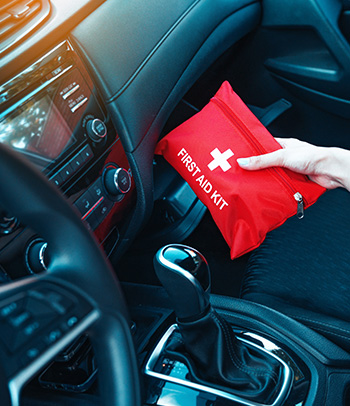 home, but if you’re traveling or out a lot for weekend activities, it may be helpful to have one in the car as well. This is especially helpful if you know you won’t be near a medical facility.
Here are some items to consider for your first aid kit based on advice from The American Red Cross and the Mayo Clinic:
- Hand sanitizer
- Latex-free gloves (to protect your hands from contact with blood or body fluids when helping someone who is injured.)
- Sterile alcohol pads (to clean the skin around a wound or to disinfect tools like tweezers. Do not apply directly to open cuts or scrapes, as this can damage tissue and slow healing. Use clean running water to rinse out wounds instead.)
- Antibiotic ointment such as bacitracin. Apply a thin layer over minor cuts and scrapes after cleaning to help keep the wound moisturized to support healing. Keeping a wound clean and covered is the most important step to prevent infection.
- Sting relief (to help relieve pain, itching, or discomfort that results from bug bites and stings)
- Adhesive bandages of all sizes, adhesive tape, and gauze (to absorb blood, compress, and cover cuts and wounds)
- Q-tips or cotton balls (to apply ointments safely or to clean an area of skin)
- Tweezers (to pull out stingers, splinters, ticks, etc., or to handle unclean materials like bloody bandages)
- Pain relievers (to reduce fever, inflammation, or pain, including both acetaminophen like Tylenol and ibuprofen like Advil and Motrin)
- Elastic wrap bandages (to wrap sprained or strained joints, or to secure gauze onto wounds)
- Oral antihistamine (to manage allergic reactions and rashes)
- Resealable bags (to dispose of contaminated items)
- Scissors
- Instant cold packs
- A clean squeeze bottle or syringe to flush debris from wounds with clean water or running tap water for rinsing minor cuts and scrapes
- Sterile saline (to irrigate or flush eyes)
- Surgical mask or breathing barrier
- Gastrointestinal medicines, such as anti-diarrhea medicine, laxatives, or antacids
- Cough and cold medicines
- Sling or triangular-shaped cloth
- Sunscreen
- Insect repellent
In addition, your family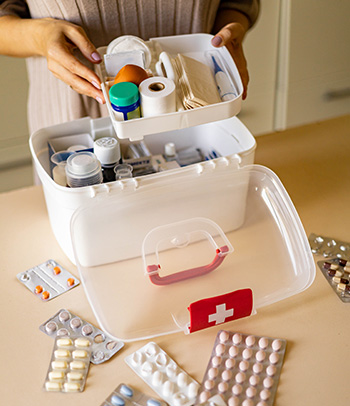 may want to consider some additional items in case of an emergency when you’re without power for several days or have to evacuate your home. These additional items may include:
- Personal medicines (If you or a family member is taking a medication, talk to your pharmacist or provider about how to stock an emergency supply. In addition, consider what other medical needs you may have, such as hearing aids, an EpiPen, an inhaler, etc.)
- Important paperwork such as a list of each family member’s medical history, medications, provider information, insurance information, and emergency contacts
- Waterproof flashlight or headlamp and extra batteries
- Blankets or sleeping bags
- Candles and matches
- Solar charger or car charger
- A few gallons of water and some non-perishable food supplies that can be eaten without access to power
- Child care supplies such as formula or diapers
Check out Healthy Homefront’s article Stay Healthy and Safe During Weather Emergencies for more detailed information and ideas.
Additional Tips
- Store your first aid kit properly. You’ll want your kit in an easy-to-access location, but keep it out of reach of young children. Make sure everyone in the house knows where it is and are familiar with its contents in case it’s necessary.
- Give your kit consistent checkups. Check your first aid kit regularly to make sure it’s well stocked. Replace supplies that have expired or been used up.
- Consider some basic training. Learning basic first aid skills can help you respond quickly in an emergency. You can take a first aid course through your local American Red Cross chapter or research other local organizations offering training. You may find both in-person and online options available.
- Prepare children in age-appropriate ways. Depending on the age of your children, be sure to go over where to find your kit, what’s in it, and how to use different items. In addition, make sure they know how to contact help in an emergency. The American Red Cross offers a number of helpful resources, including classes designed to help children understand and use first-aid techniques.
An emergency first aid kit designed to fit your family’s needs is one simple way to ensure you’re prepared for life’s unexpected moments.