

If you think you were exposed to harmful airborne hazards during your service, take action and get the care and benefits you deserve.
While serving on active duty, you may have been exposed to a variety of airborne hazards. For example, you may have inhaled smoke and fumes from open burn pits, or been around mechanical fumes or aircraft exhaust. Depending on where you served, you may have been exposed to sand and dust particles or smoke from oil well fires.
These situations can produce contaminants or potentially toxic substances that you’re exposed to through the air you breathe. Studies have linked some of these substances to breathing (respiratory) problems. Scientists are still studying whether they raise the risk of cancer, and the results so far are not clear. Because of this uncertainty, the law gives Veterans the benefit of the doubt for certain cancers.
Learn more about airborne hazards and burn pits, the potential health effects of exposure, and what steps you can take to ensure you get the care and benefits you deserve.
Background on Airborne Hazards and Burn Pits
An airborne hazard refers to any sort of contaminant or potentially toxic substance that you are exposed to through the air you breathe. While on active duty, you may have been exposed to a variety of airborne hazards, including:
- Smoke and fumes from open burn pits
- Sand, dust, and particulate matter
- General air pollution common in certain countries
- Fuel, aircraft exhaust, and other mechanical fumes
- Smoke from oil well fires
Many Veterans are especially concerned about exposure to the smoke and fumes generated by open burn pits. In Iraq, Afghanistan, and other areas of Southwest Asia, it was common to burn trash and other waste in open-air pits. Waste products commonly disposed of in burn pits included chemicals, paint, petroleum and lubricant products, plastics, medical and human waste, metals, and more.
Health Effects Connected to Airborne Hazards and Burn Pits
The longer you were exposed — especially to open burning of mixed, unsorted trash — the higher your risk may be for some conditions, such as high blood pressure and asthma.
In the short-term,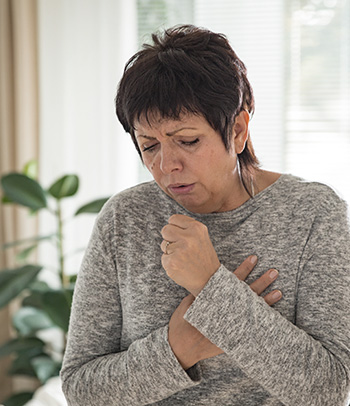 exposure to airborne hazards or the smoke created by burning certain materials may cause:
- Irritation and burning of the eyes
- Throat irritation
- Coughing
- Breathing difficulties
- Skin itching or rashes
Many of these symptoms are temporary and resolve on their own when exposure ends. However, if you were exposed for a long period of time or you were in close proximity to the types of airborne hazards listed above, you may be at greater risk for more long-term health effects or conditions.
Under the PACT Act, the VA now treats certain cancers as “presumptive.” This is a benefits rule, not proof that burn pits caused the cancer. It means you do not have to prove your service caused the illness in order to get care and benefits. These cancers include (but not limited to):
- Acute leukemia
- Brain cancer
- Head cancer of any type
- Gastrointestinal cancer of any type
- Kidney cancer
- Lymphoma of any type
- Melanoma
- Neck cancer
- Pancreatic cancer
- Reproductive cancer of any type
- Respiratory cancer of any type
For a comprehensive list of presumptive cancers, visit VA’s page on presumptive cancers related to burn pit exposure.
The PACT Act also lists several lung conditions as ‘presumptive,’ meaning you do not have to prove the cause to qualify for care. Research most strongly supports a link with asthma and COPD; the evidence for some other listed conditions is still being studied. These include (but not limited to):
- Asthma that was diagnosed after service
- Chronic bronchitis
- Chronic obstructive pulmonary disease
- Emphysema
- Sarcoidosis
These health conditions, along with certain others, are considered “presumptive” by VA, which means that VA assumes or “presumes” that your service caused the condition. In other words, if you experienced toxic exposures during your service, you don’t have to prove that your service caused your condition. You only need to meet the service requirements for the presumption.
For many service locations and time periods, VA has pre-determined that you had exposure to burn pits or other toxins, which is called “presumption of exposure.” You can read more about the places and dates affected on VA’s exposure to burn pits and other specific environmental hazards page, and get a full list of the presumptive conditions for burn pits and other toxic exposures based on the PACT Act. In 2022, Congress passed the PACT Act, which expanded health care eligibility and VA disability compensation for Veterans who experienced toxic exposures during their service.
Next Steps
If you are concerned about exposure to burn pits or other airborne hazards, here are some steps you can take:
- Talk to your healthcare provider.
- Apply for VA healthcare.
 The PACT Act expands VA healthcare and benefits for Veterans exposed to burn pits and other toxic substances. Learn more about the PACT Act and your VA benefits. In addition, if you served in Operation Enduring Freedom in Afghanistan or Operations Iraqi Freedom or New Dawn in Iraq, you could receive free VA healthcare for up to 10 years after separation from the military. Read about eligibility for free VA health care as a post-9/11 combat Veteran.
- File a claim for VA disability compensation. If you have a health condition caused by exposure to burn pits or other specific hazards in the air, soil, or water during your service, you may be eligible. If VA denied your disability claim in the past and your condition is now considered presumptive, you can file a Supplemental Claim and have your case reviewed again. Find out how to file a Supplemental Claim. You can also get help filing a claim from an accredited attorney, claims agent, or Veterans Service Organization representative.
Resources
- To learn more about other types of military exposures, visit VA’s military exposures homepage.
Veterans, if you think you were exposed to harmful airborne hazards during your service, take action and get the care and benefits you deserve.