

Under the PACT Act, testicular cancer is recognized as a presumptive condition, allowing affected Veterans to receive care and benefits more easily.
Testicular cancer is the most common solid tumor found in males between the ages of 15 and 40. Some studies have found higher rates of testicular cancer in military personnel, though the direct link between burn pit exposure and testicular cancer is still being studied. Under the PACT Act, testicular cancer is treated as a presumptive condition for Veterans exposed to burn pits, meaning Veterans do not need to prove the connection to receive benefits.
The good news is that when it’s caught early, testicular cancer is among the most curable types of cancer. Under the PACT Act – which expands healthcare and benefits for Veterans exposed to burn pits, Agent Orange, and other toxins – testicular cancer is recognized as a presumptive condition, allowing affected Veterans to receive care and benefits more easily.
Learn more about testicular cancer, and the treatment and resources available through the PACT Act to support Veterans diagnosed with it.
What Is Testicular Cancer?
Testicular cancer is a disease in which cancer cells form in the tissues of one or both testicles. The testicles are two egg-shaped glands located inside the scrotum, the loose bag of skin underneath the penis. Testicular cancer typically originates in the germ cells of the testicles.
There are two primary types of testicular germ cell tumors:
- Seminomas: These tumors are more sensitive to radiation therapy and generally grow and spread more slowly.
- Nonseminomas: These tumors tend to grow and spread more quickly than seminomas. They include several subtypes, such as embryonal carcinoma, yolk sac tumors, choriocarcinoma, and teratoma.
Testicular cancer can happen at any age, but it is most often found in males between the ages of 15 and 40.
What Are the Symptoms?
Symptoms of testicular cancer can include:
- A painless lump or swelling in one or both testicles
- A feeling of heaviness or discomfort in the scrotum
- Pain in the lower abdomen, back, or groin
- Changes in the size or shape of the testicles
What Are the Risk Factors?
Testicular cancer is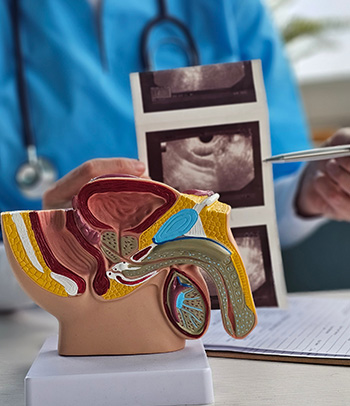 not a common form of cancer, but there are factors that may increase your risk, including:
- Having an undescended testicle (cryptorchidism)
- Having a family history of testicular cancer
- Having had cancer in the other testicle before
- Being white and between the ages of 15 and 40
- Having fertility problems
- Using marijuana (cannabis), especially for many years
- Having certain genetic conditions, such as Klinefelter syndrome
- Being exposed to burn pits or other toxins during military service (currently being studied)
Burn pits, commonly located on bases in Iraq and Afghanistan, were used to burn waste like trash, plastics, rubber, chemicals, and other hazardous materials. These burn pits are now associated with different types of medical conditions, such as various respiratory diseases and cancers, including testicular cancer.
Veterans who served near burn pits and experience symptoms like testicular lumps or pain should seek a medical evaluation.
How Is Testicular Cancer Treated?
The good news is that testicular cancer is one of the most treatable forms of cancer and can usually be cured. While a cancer diagnosis is always serious, testicular cancer is treated successfully in 95% of cases. When found early before it has spread beyond the testicle (stage 1), the cure rate is about 99%.
Testicular cancer is diagnosed in various ways, such as a physical examination (to check for lumps or abnormalities), an ultrasound (to detect any tumors), or blood tests (to measure tumor markers).
Once you have a diagnosis, treatment begins. Treatment for testicular cancer depends on the type and stage of the disease. Common treatments include:
- Active surveillance — Close monitoring with regular blood tests and imaging, often used for early-stage disease after surgery.
- Surgery — To remove the affected testicle (and sometimes lymph nodes in the back of the abdomen).
- Radiation therapy — To target cancer cells, usually used for seminomas.
- Chemotherapy — To kill cancer cells, used for both seminomas and nonseminomas, especially when the cancer has spread.
How Does the Department of Veterans Affairs Support Veterans With Testicular Cancer?
In 2022, the PACT Act significantly expanded eligibility for Department of Veterans Affairs (VA) health care and benefits, introduced new presumptive conditions, and mandated toxic exposure screenings for all enrolled Veterans.
Under the PACT Act, testicular cancer is recognized as a presumptive condition, which allows affected Veterans to receive benefits more easily. As a presumptive condition, it is automatically assumed or “presumed” to be caused by military Service, which means Veterans do not need to prove a direct connection between their Service and their cancer diagnosis to receive benefits.
If you are diagnosed with testicular cancer and have had exposure to burn pits or served in a qualifying location, you may be eligible for benefits and compensation. VA encourages you to file a claim for disability compensation and apply for VA health care.
Find out if you meet the service requirements for presumptive exposure, and if so, get the benefits and care you deserve. File a VA disability claim and apply for VA healthcare today.
Testicular cancer is treatable, and VA is here to support you.