
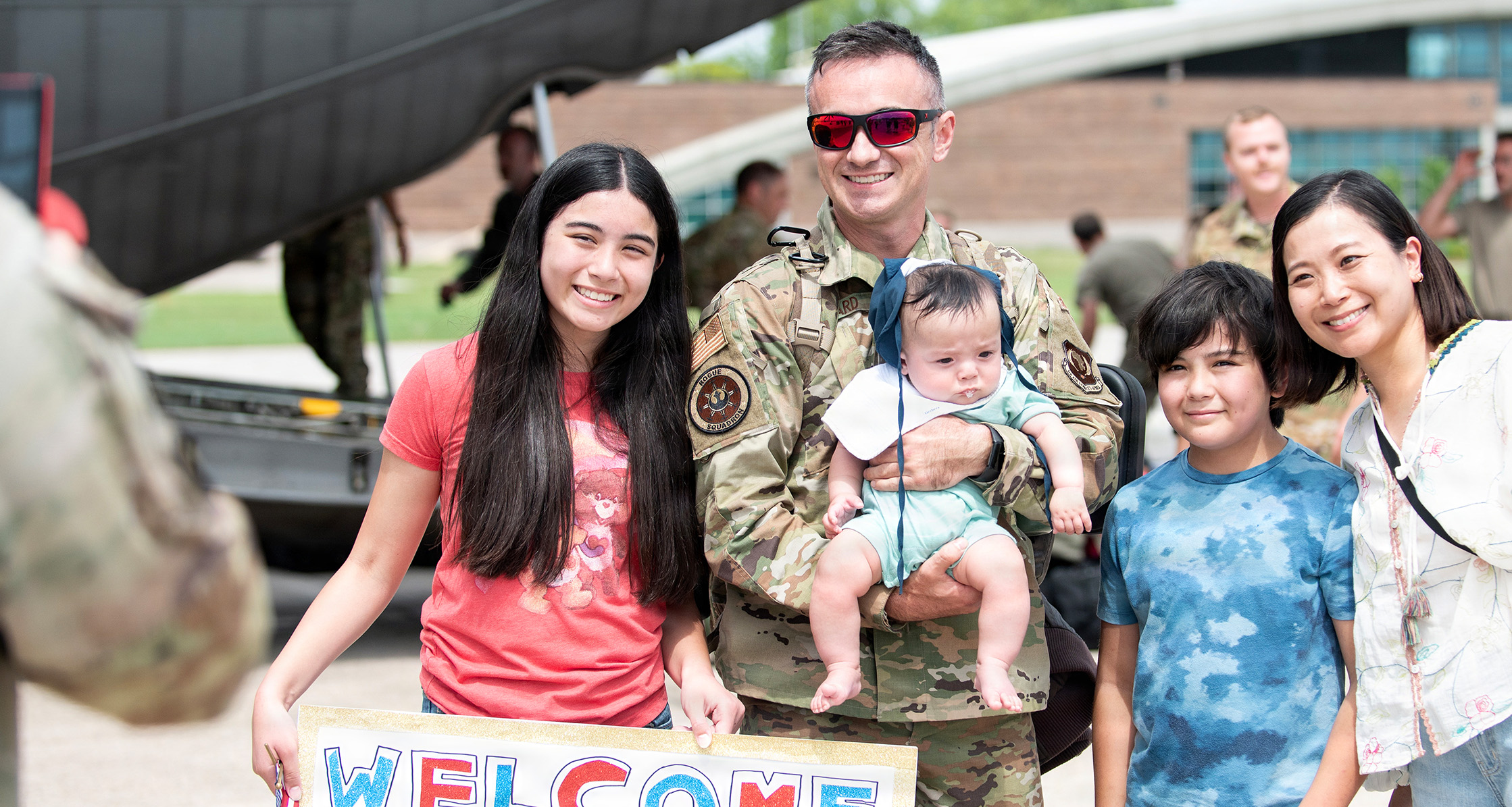
After a deployment, it can be very challenging for Service members and their families to figure out how to get back on track.
After your Service member returns home from deployment, after all the hugs, the tears of joy, and the happy celebrations, there is the big question of how to get back to “normal.” While your loved one was deployed, daily life at home continued. You may have established new schedules and created new routines, and your entire family will need to take some time to readjust and reestablish consistency.
Get tips for how to rebuild your family’s routines after a deployment, and learn more about the resources designed to support you.
Strategies for Rebuilding Your Family’s Routines
After a deployment, it can be very challenging for Service members and their families to figure out how to get back on track. No two families are the same, so everyone’s journey will look different and follow a different timeline, but here are some tips to consider as you navigate this transition:
- Don’t set a timeline. Reintegration after a deployment can take longer than you imagine and may be more complicated than you expect. Your Service member may need time and space to process the experiences of the deployment; your children may react differently than you hoped, and you may have emotions you didn’t expect. It may take days, weeks, or even months to get back on track, and even then, “normal” may look different from what it did before.
- Accept change. During the deployment, everyone changed, including you, your Service member, and the rest of your family. After the initial celebration of the return, rebuilding requires a recognition of growth, changes, and sacrifices that everyone made during the time apart. New routines and expectations have been formed and will need to be adapted to reintegrate your Service member. Communication will have to be strong as new norms are developed. Instead of trying to return to your exact pre-deployment “normal,” sit down and share how household chores, finances, and childcare have been handled during the deployment and discuss how you’d like to do it moving forward. Keep what you found worked well, change what wasn’t working, and focus on slowly building a new routine as a family.
- Keep communication open.
 Roles and routines have shifted and changed during the deployment, and there’s no way for your loved one to know what’s changed, what you expect, or how to fit back into the picture. As you begin to resettle into daily life, talk to each other and share what you need to get back to feeling like a family again. Focus on taking time to recognize the accomplishments, achievements, and positives that have occurred during the time apart to help form that connection. Remember that everyone went through the experience of the deployment not just the deployed service member.
 - Practice self-care. Everyday life can be difficult, especially when you’re experiencing big changes. During these life transitions, it’s important to ensure you’re taking care of your health. As you work to reconnect as a family, build in time for daily movement, maintain a healthy eating pattern, and get enough sleep. Feeling unhealthy and worn down can make you feel even more stressed and on edge.
- Establish healthy outlets for stress. During the reintegration process, things will get stressful, so it’s important to have healthy ways to deal with it. Avoid drugs or too much alcohol, and instead try stress-relievers, such as deep breathing, meditation, journaling, or some other activity or hobby you find relaxing. The mobile app, Breathe2Relax, is a good tool for learning breathing techniques that can be calming.
- Leave time to relax and readjust. Instead of focusing on scheduling visits with family and friends, or cramming in all the fun and activity you missed during the deployment, leave time to relax and readjust. Think about waiting to schedule vacations, out-of-town trips, or lots of house guests, and instead focus on relaxing and relearning how to live in the same house, day after day, without any added pressure. It’s OK for that big stuff to wait until everyone is ready.
- Get routine health services. If any of you let anything go during the chaos or stress of the deployment, it’s time to catch back up. Did you miss a dental cleaning? What about an annual check-up or routine physical? Did you skip an important immunization? Check in with your health care providers, catch them up on any health issues you’re dealing with, and make sure you get your health back on track.
- Allow space for
 all the emotions. You may have days when you’re irritated, frustrated, distant, or out of sync with each other. It may take time to sort through differences and get back to feeling connected. While you work on rebuilding your routine, consider using Military OneSource’s free, confidential specialty consultation. Building Healthy Relationships specialty consultations are designed to help loved ones reconnect with their Service members through personalized coaching sessions.
 - Recognize the symptoms of untreated mental health conditions. By recognizing the first signs of a mental health condition, you can prevent it from worsening. Keep your eye out for symptoms such as social withdrawal, extreme highs and lows, intense anger, prolonged sadness, or excessive fear. If you see these symptoms, or suspect your loved one is suffering from post-traumatic stress, depression, or anxiety, encourage them to seek treatment. If they seem reluctant, check out Healthy Homefront’s article Starting a Conversation about Mental Health or suggest Military OneSource’s peer-to-peer support, so your loved one can talk to someone who’s shared many of their military experiences, including deployment.
- Get support. If the reintegration process has left you feeling overwhelmed and unsure about how to move forward, reach out for support. You can access free, confidential counseling through Military OneSource or your installation’s Military and Family Support Center. Counselors can help with everyday challenges related to military life, including reintegration, relationship issues, stress, and more.
Resources
TRICARE – Your TRICARE plan has several services that can help you stay balanced in both mind and body. Take advantage of preventative care, mental health services, and more.
Military Crisis Line – The Crisis Line is a free, confidential resource. If you or a loved one is going through mental health-related distress, dial 988 and press 1. You can call, chat, or text with a trained counselor 24/7.
Military OneSource confidential counseling – Military OneSource counselors are available for free, short-term, confidential counseling for a wide range of issues, including managing deployments, coping with grief or loss, and more. Sessions take place in person, over the phone, or via secure video or online chat. Military OneSource also offers several resources related to returning from deployment, including guides, articles, and more.
It may take some time, but with the right strategies and support, your family can reestablish healthy routines and continue to thrive!