
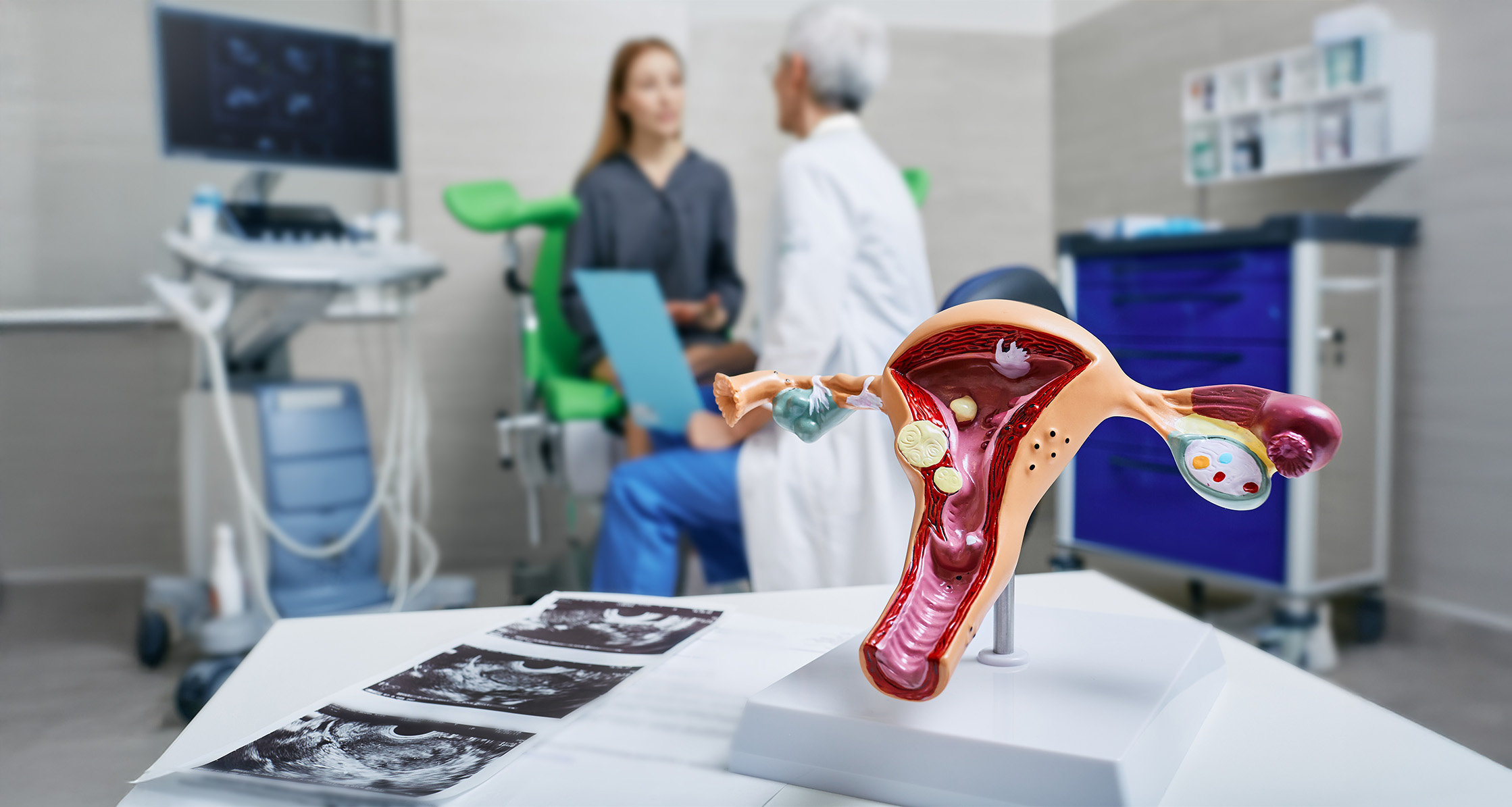
Fibroids are the most common noncancerous tumors in women of childbearing age.
Uterine fibroids are extremely common throughout a woman’s lifetime. Common symptoms include heavy menstrual bleeding, frequent urination, and pain during sex. However, only about 50% of women experience symptoms. Treatment for fibroids is available and typically depends on your symptoms.
Learn more about uterine fibroids, what causes them, tests to discover them, and treatment options.
What are Uterine Fibroids?
The National Library of Medicine calls uterine fibroids growths made of muscle and tissue that form in or on the wall of your uterus. These growths are usually not cancerous and are common in women of childbearing age.
Fibroids can grow as a single tumor or there can be a cluster of them in the uterus. They can be as small as an apple seed or as big as a grapefruit. In rare cases, they can become even larger.
You may have uterine fibroids and not even know it, since they often don’t cause any symptoms. Your health care professional may find fibroids during a routine pelvic exam or pregnancy ultrasound. When fibroids do cause symptoms, they can be difficult to live with, often causing pain or heavy bleeding.
What Causes Uterine Fibroids?
The exact cause of uterine fibroids is unknown, but there are several factors that may affect your risk for developing fibroids, including:
- Obesity
- Vitamin D deficiency
- Hypertension
- Your age (fibroids are most common in a woman’s 30s or 40s)
- A family history of fibroids (For example, if your mother had fibroids, you’re three times more likely to develop them.)
- Not having children
- Early onset menstruation
- Ethnicity (Black women are more likely to develop fibroids than women of other racial groups.)
How Do Fibroids Affect Your Health?
Most of the time, uterine fibroids aren’t dangerous and don’t cause any symptoms. For women who experience symptoms, their symptoms may depend on the location, size, and number of fibroids present.

- Pain in your back or abdomen
- Heavy bleeding or painful periods
- Bleeding between your periods
- A frequent urge to urinate
- Difficult bowel movements or constipation
- Heaviness or fullness in the lower stomach or pelvic area
- Pain during sex
In addition to the symptoms listed above, uterine fibroids may cause more serious complications in some cases, such as:
- Anemia
- Trouble getting pregnant or infertility (most fibroids don’t interfere with getting pregnant)
- Pregnancy complications such as fetal growth restriction or preterm delivery
- Enlargement of the lower abdomen
How Are Fibroids Diagnosed and Treated?
Your health care provider may find fibroids during a regular pelvic exam by feeling irregular changes to the shape of your uterus. For other women, symptoms like heavy bleeding may alert their provider to consider or feel for fibroids.
Imaging tests, such as an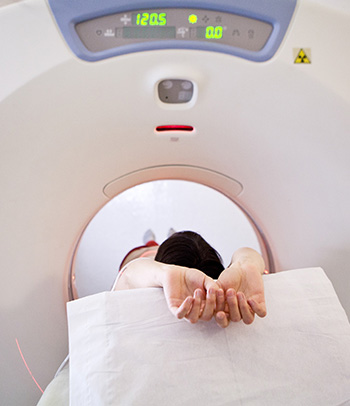 ultrasound, an MRI, an X-ray, or a CT scan, can confirm if you have fibroids. Your provider may also run lab tests if you’re having irregular bleeding to check for anemia, a bleeding disorder, or a thyroid problem.
There are a growing number of effective ways to treat fibroids. Your health care provider will talk with you about the best options to solve your problem and meet your needs.
Since no two fibroids are the same, the type of treatment you have will be tailored to your body. Factors to consider include how many fibroids you have, their size, how fast they’ve grown, where they’re located, whether you plan to have children, and whether you have any symptoms.
If you do not have any symptoms or your symptoms are very mild, you may not need any treatment at all. Your provider can check the fibroids during your regular exams to see if they have grown, and he or she will monitor them for any changes. Fibroids are not cancerous, and they tend to shrink on their own after menopause.
Otherwise, you and your provider can discuss the best treatment option for you with a goal of relieving your symptoms. Treatment options include:
- Medications–Mild symptoms can be treated with over-the-counter pain medications, iron supplements, birth control methods, or other drugs used to shrink your fibroids.
- Surgery–For moderate or severe symptoms, surgery may be an option. The type of surgery depends on the size and location of the fibroids. Some surgical options preserve your uterus and allow you to become pregnant in the future, while other options can either damage or remove your uterus.
You can find more details and explanations of different medicines and surgical procedures on Mayo Clinic’s diagnosis and treatment page.
TRICARE offers several services specific to the health and wellness of women. Learn more about what your TRICARE plan covers, including screenings, reproductive health services such as birth control, infertility services, treatment for fibroids, and more.
The Department of Veterans Affairs (VA) offers primary care and comprehensive women’s health services including routine screenings, reproductive care services, gynecologic services, and much more. To learn more about treatment for uterine fibroids and how VA can help, as well as answers about your enrollment and eligibility for VA care, call, text, or chat online with the Women Veterans Call Center at 855-829-6636.
Fibroids are the most common noncancerous tumors in women of childbearing age. If you’re experiencing painful symptoms, you don’t have to suffer in silence. Reach out to your health care provider and discuss the best way to treat your fibroids and live fully.