
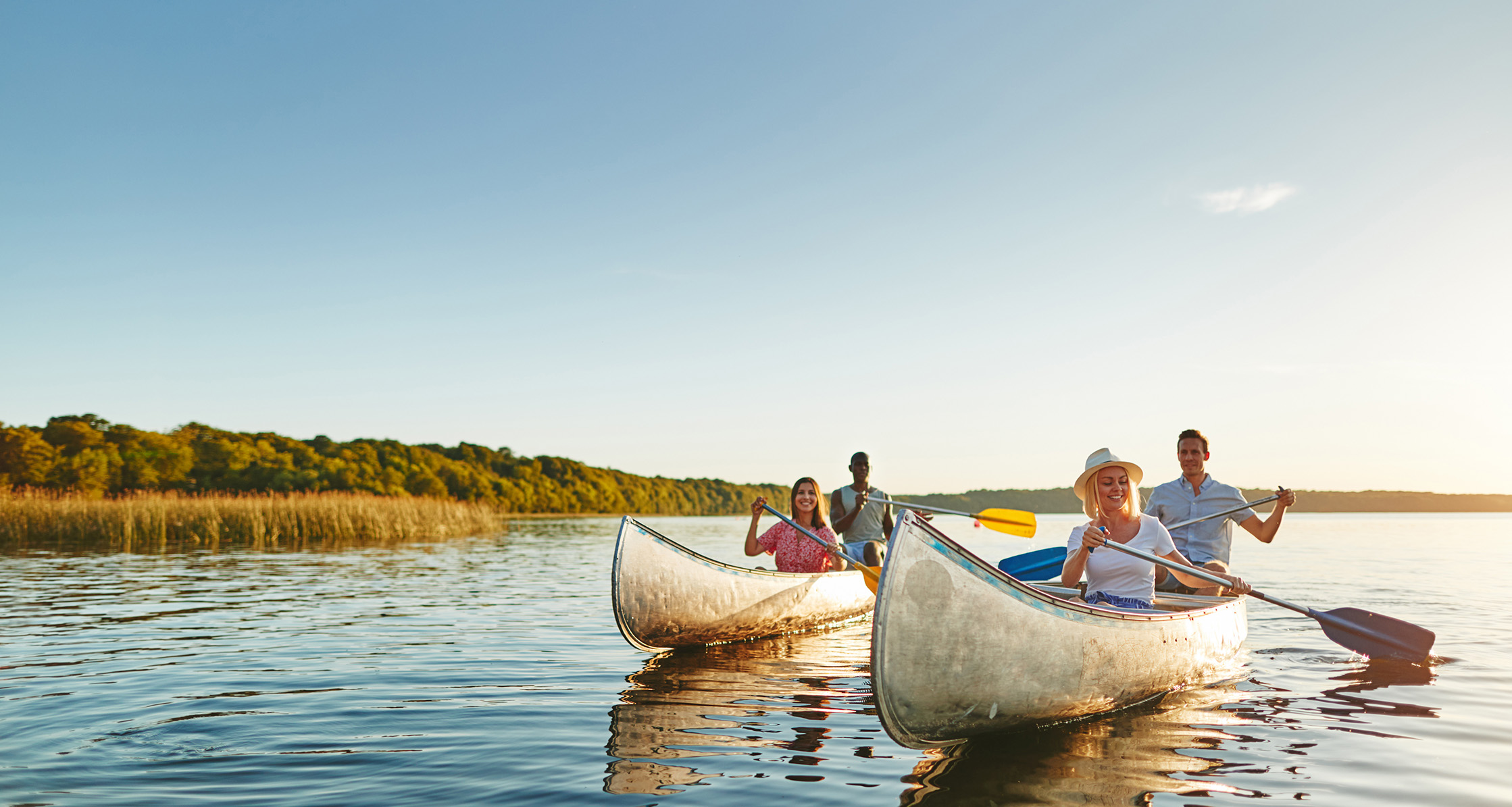
With all of the potential health benefits provided by nature, finding small and simple ways to increase the time we spend outside is important.
According to the Environmental Protection Agency, Americans live 90% of their lives indoors. For many of us, both work and downtime are spent indoors, often connected to screens or devices of some kind. This way of living doesn’t leave us a lot of time to be outdoors in a natural environment.
Unfortunately, as many of us have become more disconnected from the outdoors, our health – both physical and mental – has started to suffer. Between having increased access to news and social media and being constantly connected to work and other responsibilities, you may find yourself overwhelmed or stressed, as well as more sedentary than you’d like to be.
Some experts suggest using the power of nature to turn the tide and improve our health and wellness, as many studies show that being outdoors can boost your mood, regulate stress, increase your physical activity levels, and more.
Learn more about the potential health benefits of nature and get tips on how to spend more of your time outside.
The Health Benefits of Nature
Research shows that spending at least two hours per week in nature can benefit your physical and mental health. Both adults and children who spend time in nature report being less stressed, sleeping better, and improving their focus and attention.
According to data from a variety of sources, such as the National Library of Medicine and the American Heart Association, spending time in nature can benefit your health in many ways, including:
- Improving your immune system function – Exposure to vitamin D, as well as the forest air full of antifungal and antibacterial qualities, can help boost your body’s immune system.
- Improving your mood and emotional well-being – Studies show that being in nature, even for just 20 minutes, can make you feel happier and reduce symptoms of depression and anxiety.
- Promoting or stimulating
 physical activity and movement – Time spent in nature is often when we’re walking, hiking, or moving our bodies, which has numerous health benefits, such as reducing risk for obesity, heart issues, and other chronic conditions.
 - Reducing stress – Spending time in nature can lower your heart rate, blood pressure, and cortisol levels. Natural environments allow our minds and bodies to relax and step away from the hyper-connected, fast-paced environments we’re used to.
- Improving the quality of your sleep – When you’re exposed to sunlight, especially in the morning, your body’s internal clock or circadian rhythm is able to regulate itself, which can help you get better quality sleep at night.
- Improving your heart health – Through increased opportunity for movement and decreased levels of stress, being in nature can improve your heart health.
- Recharging your attention and focus – Many people are overstimulated by their daily environments. Since nature engages us in a less demanding and intense way, it allows our brains to recover and recharge, making us ready to focus on whatever tasks lie ahead.
- Promoting a sense of belonging and connection – When you’re surrounded by trees that are hundreds of years old or a sky full of millions of stars, you may see yourself as connected to something much bigger than yourself. This can help you reduce your focus on your own day-to-day struggles or loneliness.
- Sparking creativity and curiosity – When we’re in nature, we can relax and let our minds wander, giving us a chance to be curious and creative.
Tips for Spending More Time in Nature
With all of the potential health benefits provided by nature, finding small and simple ways to increase the time we spend outside is important. Here are some tips for getting started:
- Start small. If you aren’t used to spending time in nature, take it slow. Plan a short walk or hike, do some gardening outdoors, or find another small way to get fresh air and begin to think about nature as a health benefit.
- Explore your community. With a little research, you may find simple ways to access the outdoors you weren’t aware of before. For example, maybe you can find a hiking trail that can replace your walk through your neighborhood streets. Or maybe you can find a park you’ve never visited before where you can sit for a few minutes each evening.
- Volunteer. Search for ways to combine a volunteering opportunity with some outdoor time. Clean up a local park or collect trash near a stream or lake.
- Replace an indoor
 activity with some outside time. See what you’re doing already in your daily routine that you can move outdoors for some fresh air. For example, take your yoga session out into the yard or exchange your walk on the treadmill for a walk through the neighborhood. Take your phone call outside on a park bench, or commute to work on a bike if possible.
 - Make it fun. Take up birdwatching, gardening, photography, journaling, or sketching. Use free apps to identify local birds or plants, create fun scavenger hunts for your kids, or search for local hiking or biking groups.
- Be in the present. Use the opportunity to be in the present and connect with yourself and your surroundings. Try to unplug from cell phones and devices when you can. In a world that constantly bombards you with information and pressures you to engage at a fast pace, use your time in nature to relax and focus on the sights, sounds, and smells around you. Doing this is similar to many relaxation techniques that have been shown to help with post-traumatic stress disorder and other mental health conditions.
- Don’t overthink it. If you can’t take a hike through the mountains or go deep into the forest, it’s OK. Even when you access green spaces and fresh air within busy urban environments, you can reap health benefits. Find the green spaces that are accessible and easy for you to incorporate into your daily life.
The next time you get a chance to head outside, do it! Your mental and physical health will thank you.